
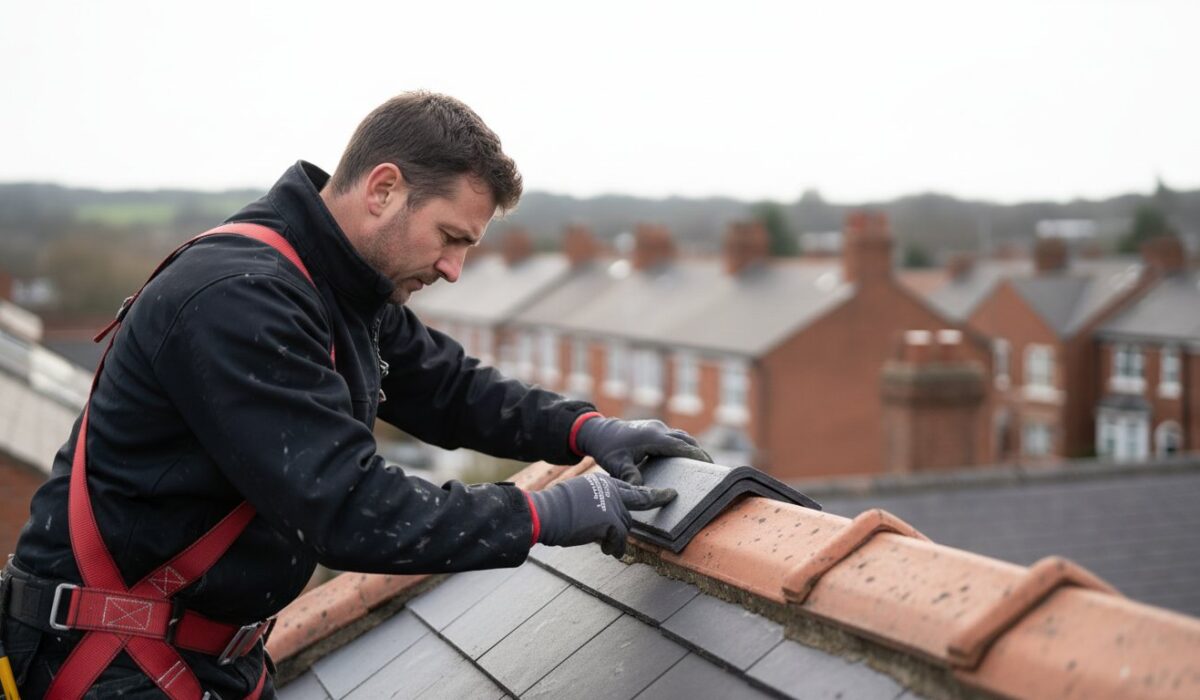
Last November, during a particularly heavy East Midlands storm, a homeowner in West Bridgford found a fragment of clay on their driveway. That small piece was a section of their roof ridge tiles, and its failure left the very peak of their property exposed to the elements. We know how unsettling it feels to hear the wind howling while worrying about the integrity of your roof. It’s a common concern for many people across Nottinghamshire, especially when dealing with older mortar that has perished over time.
In this guide, we’ll explain exactly how to keep your home weather-tight and compliant with current UK building regulations. You’ll learn about the differences between traditional bedding and modern dry ridge systems, along with clear advice on repair costs and maintenance. Our goal is to replace your stress with the quiet confidence that comes from a secure, professionally finished roof. Whether you need a minor fix or a full installation, we provide a free, no-obligation quote within 24 hours to ensure your home remains protected and your garden stays tidy.
Key Takeaways
- Understand why these apex caps are your home’s primary defence against the unpredictable Nottingham weather and water ingress.
- Compare the durability and colour retention of clay versus concrete to ensure your roof remains both functional and attractive for decades.
- Discover how modern roof ridge tiles are now secured using BS 5534 compliant dry-fix systems to prevent common mortar failures.
- Identify the critical visual and internal warning signs that indicate your ridge line requires professional repair or replacement.
- Learn how Archers Roofing Services Ltd provides peace of mind through fully guaranteed workmanship and free quotes delivered within 24 hours.
What are Roof Ridge Tiles and Why are They Vital for Your Nottingham Home?
Roof ridge tiles are the specialised triangular or curved caps that sit at the very peak of your property. Since 2001, Archers Roofing has secured thousands of these essential components across Nottinghamshire. This horizontal line where two roof slopes meet is the most vulnerable point of any structure. Without these tiles, rainwater would drive directly into the roof space, leading to timber rot and internal damp. While standard Roof Tiles cover the main slopes, roof ridge tiles provide the critical finishing seal that keeps the elements at bay.
It’s easy to confuse these with hip tiles. Ridge tiles run horizontally along the top peak of a pitched roof. In contrast, hip tiles follow the diagonal junctions where two roof faces meet at an external corner. Both are vital for a watertight home, but the ridge takes the brunt of the UK’s upward wind gusts. We find that many homeowners overlook these tiles until a leak appears, but they are the primary guardians of your roof’s structural integrity.
Beyond protection, these tiles contribute significantly to the visual finish of your home. A neat, well-pointed ridge line indicates a property that has been maintained with care. Our team ensures that every installation looks as good as it performs, matching the specific style of your existing roofline to maintain your home’s market value.
The Anatomy of a Protective Roof Apex
Your roof’s apex needs more than just a simple cover. Every ridge tile must overlap the next by a minimum of 50mm to create a continuous, impenetrable weather seal. This barrier works in tandem with the underlying breathable membrane to ensure moisture escapes from the attic while driving rain stays out. High winds often create a vacuum effect at the peak of a building. This suction can lift loose tiles, making the apex the first area to suffer during a typical East Midlands storm. We bed every tile in high-strength mortar or secure them with modern dry-fix mechanical systems to prevent this displacement.
Ridge Tiles and Nottingham’s Architectural Heritage
Nottingham’s skyline is defined by its varied architectural history. In Victorian areas like West Bridgford and Beeston, we often work with ornate terracotta roof ridge tiles. These frequently include decorative finials or even dragon ridges that add unique character to 19th-century terraces. Matching these historical styles is a priority for us. We source specific clay or concrete profiles to ensure repairs blend perfectly with your existing roofline. Whether your home uses traditional Welsh slate roof materials or modern interlocking clay, the right ridge tile preserves both the structural integrity and the kerb appeal of the property.
This focus on blending historical integrity with modern standards is a key principle in quality building work. For homeowners interested in seeing how these principles apply to larger renovations and extensions, the work of architectural firms like London’s Advance Architecture offers valuable insight into creating cohesive, character-filled properties.
We provide free quotes within 24 hours for all ridge repairs and installations. Our team is fully insured and ready for any emergency call-out across the county. Contact Archers Roofing today to secure your home’s most vital line of defence.
Choosing the Right Materials: Clay vs. Concrete Ridge Tiles
Selecting the right roof ridge tiles is a decision that impacts both the look and the structural health of your home. Since 2001, we’ve helped homeowners across Nottingham and Nottinghamshire navigate these choices with confidence. The two primary options are clay and concrete. Each material offers distinct advantages depending on your budget, the age of your property, and your aesthetic goals.
Clay Ridge Tiles: The Traditional Choice
Clay remains the gold standard for traditional Nottinghamshire cottages and period homes. These tiles possess natural weathering properties that allow them to blend seamlessly with historic brickwork. One major benefit is their resistance to moss and lichen. Because clay is naturally dense and less porous than concrete, it stays cleaner for longer periods. You can expect a typical lifespan of 60 years or more when these are installed correctly by our expert team. While the initial cost is higher, the colour retention is superior. Clay tiles won’t fade under UV exposure, maintaining their deep terracotta hue for many decades.
Concrete Ridge Tiles: Modern Efficiency
Concrete is a popular, cost-effective solution for modern housing developments in areas like Mapperley and West Bridgford. These tiles are manufactured to high tolerances, often featuring interlocking designs that provide enhanced wind resistance. This is a vital feature for protecting your home against storm damage. Concrete tiles come in a wide variety of shades, including deep greys and various terracotta tones. This variety makes it easy to match modern roof tiles. While they may lose some colour intensity over 20 to 30 years, they offer a sturdy and reliable finish for the modern homeowner.
Weight plays a massive role in the health of your roof. Concrete roof ridge tiles are generally heavier, with a single tile often weighing around 5kg. This is roughly 15% heavier than some clay alternatives. We always check your roof’s structural integrity to ensure the timber rafters can handle the load before we begin any installation. The profile also matters for both cost and performance:
- Half-round tiles: These are the most common choice in the UK, providing a soft, curved finish that suits almost any roof type.
- Plain angle tiles: These are better suited for modern buildings with a specific 45-degree pitch, offering a sharp, clean line along the ridge.
Whether you choose clay or concrete, the method of fixing is what prevents leaks and long-term movement. We follow industry standards on how to fix ridge tiles to ensure every install is storm-proof and secure. Our work is fully guaranteed, giving you total peace of mind. If you’re unsure which material suits your home, we can provide samples and professional advice during a site visit. When we provide your free quote within 24 hours, we’ll recommend the profile that offers the best cost-benefit ratio for your specific roof pitch.
If you’ve noticed a loose tile or want to upgrade your roof’s appearance, you can request a free, no-obligation quote from our Kinoulton-based team today.
Dry Ridge Systems vs. Traditional Mortar Bedding
For decades, sand and cement mortar served as the standard method for securing roof ridge tiles across the UK. This changed significantly following the 2014 update to the BS 5534 Code of Practice, which now requires all ridge tiles to be mechanically fixed. Mortar is no longer considered strong enough on its own to resist modern wind loads. While we still use traditional mortar for heritage projects and Grade II listed buildings in Nottingham to preserve their historical character, dry ridge systems are now the go-to solution for 95% of our residential installations.
Dry ridge technology replaces wet cement with a mechanical fixing system. It offers a maintenance-free alternative that accommodates the natural movement of a building. Unlike mortar, which is rigid and prone to failure, dry ridge components are designed to last for decades without degrading. This shift has vastly improved the safety and longevity of British rooflines.
The Problem with Mortar in the East Midlands
Nottinghamshire homes face harsh weather conditions that take a toll on traditional materials. Frequent frost cycles cause moisture trapped within the mortar to freeze and expand. This process leads to “blown” mortar, where the bond between the roof ridge tiles and the roof structure simply snaps. We frequently see these crumbled pieces falling into gutters, leading to blockages and expensive damp issues. Since Archers Roofing was established in 2001, we have found that re-pointing is often a temporary fix. Traditional mortar usually requires significant attention every 10 to 15 years to remain safe.
How Dry Ridge Systems Work
A dry ridge system uses high-grade stainless steel screws and brackets to clamp tiles firmly to the ridge batten. This creates a secure connection that cannot be dislodged by high winds. The system includes a ventilated waterproof union that allows the roof to breathe. This airflow is vital. It reduces the risk of condensation in your loft space by up to 50% compared to a sealed mortar ridge. Our team can complete most installations in a single day. Because there is no cement to mix or dry, the system provides immediate weatherproofing even if it rains shortly after we finish.
We provide free, no-obligation quotes within 24 hours for all ridge repairs and upgrades. All our work is fully guaranteed and we are fully insured for your peace of mind. If you are worried about loose tiles or crumbling mortar, contact Archers Roofing today to secure your home.

Signs of Damage: When to Repair Your Roof Ridge Tiles
Identifying failure in your roof ridge tiles early can save you thousands in structural repairs. Since 2001, we’ve seen how the varied weather across Nottinghamshire and Leicestershire takes a toll on traditional mortar-bedded ridges. You should look for gaps in the pointing or tiles that no longer sit in a straight, even line. If the ridge line looks jagged or “toothed” against the sky, the bedding mortar has likely perished and lost its adhesive grip on the tile.
Internal signs are just as telling. We often find damp patches on loft insulation or dark staining around the chimney stack during our local inspections. These are clear indicators that water is bypassing the ridge. Moss growth is another silent culprit. It acts like a structural sponge, holding moisture against the tile. During a typical UK winter, water trapped in moss expands as it freezes. This expansion cracks the mortar, and with over 30 frost cycles occurring in an average year, the decay of your roof’s peak happens much faster than you might expect.
The “Binocular Test” for Homeowners
You don’t need to climb a ladder to check your roof’s health. We recommend standing back in your garden or across the street with a pair of binoculars to inspect the roofline safely. On a bright afternoon, head into your attic space; if you can see “daylight” showing through the ridge, you have a total seal failure. Spotting small chunks of grey mortar or red tile fragments on your driveway or patio is a 100% reliable sign that your ridge tiles require professional attention from our Kinoulton-based team.
The Risks of Delaying Ridge Repairs
Roofing issues never stay small for long. One loose tile often leads to a domino effect where wind gets underneath the adjacent tiles and lifts them from the bed. During 70mph storm gusts, a detached ridge tile becomes a dangerous projectile that can cause significant damage to vehicles or property below. Delaying repairs also puts your leadwork and chimney flashings at risk. Water ingress through the ridge can rot timber rafters within 12 to 18 months, leading to structural problems that far exceed the cost of a simple repair or re-pointing job.
Professional Installation and Repair Services in Nottingham
Archers Roofing takes a modern approach to a traditional craft. We prioritise BS 5534 compliant dry-fix installations for every project. This British Standard ensures that roof ridge tiles are mechanically fixed rather than relying solely on mortar. Traditional mortar eventually cracks due to thermal expansion and local weather patterns. By using screws and specialised clips, we provide a secure finish that withstands high winds and prevents tiles from becoming projectiles during storms.
Our repair process is thorough and systematic. We don’t cover up existing problems. Our team safely removes all old, degraded mortar and debris from the ridge line. We then inspect the underlying felt and battens for any signs of rot or damp. Once the area is clean and prepared, we secure any loose tiles using modern fixing kits. This prevents the tiles from shifting and protects your home from water ingress, ensuring the structural integrity of your roof remains intact for years.
Choosing a local, fully insured contractor is vital for your peace of mind. We provide transparent, no-obligation quotes within 24 hours of your initial enquiry. Because we’re based in Kinoulton, we can respond quickly to local needs. We don’t believe in high-pressure sales tactics. Instead, we focus on providing clear, competitive pricing and honest advice based on over 20 years of trade experience.
A contractor’s reputation is just as important as their technical skill. In the digital age, businesses must actively manage their online image to build the kind of trust we’ve established over 20 years. For those interested in how modern companies protect their brand, you can visit Aria Operations to learn more about AI-powered reputation intelligence.
Our Local Expertise in Nottinghamshire
Since 2001, we’ve been fixing roofs across Nottingham and Derby. We understand that properties in the East Midlands face specific wind loads and weather conditions that require precise installation techniques. Our team tailors every ridge solution to suit the height and exposure of your building. For comprehensive guidance on all aspects of roof maintenance and repair, including ridge tiles, our pitched roof guide for Nottingham homeowners provides detailed insights into choosing the right materials and maintenance schedules. We pride ourselves on being punctual and reliable for every homeowner in the county.
Quality Guarantee and Peace of Mind
All our roof ridge tiles work comes with a comprehensive guarantee. This means you can rest easy knowing your investment is protected by a team that stands behind its workmanship. We also believe a job isn’t finished until your property is spotless. Our team removes all waste and old materials, leaving your garden and driveway exactly as we found them. We maintain a reputation for clean and tidy workmanship that speaks for itself in every street we work on.
Protect Your Nottingham Property With Expert Ridge Care
Your roof is your home’s first line of defence against the elements. Ensuring your roof ridge tiles are secure prevents leaks and avoids expensive structural repairs later on. Whether you need a simple mortar repair or a complete transition to a modern dry ridge system, choosing the right clay or concrete materials is vital for long-term durability. We’ve seen how Nottingham’s weather can test even the sturdiest roofs, so catching early signs of wear is always the smartest move.
Archers Roofing has provided reliable local expertise since 2001. We don’t believe in corporate jargon; we focus on high-quality workmanship and honest advice. Every job we complete comes with a 10-year guarantee and the protection of being fully insured. We value your time, which is why we provide transparent, competitive quotes within 24 hours of inspecting your property. From our base in Kinoulton, we’re proud to keep homes across Nottinghamshire and Leicestershire safe and dry.
Take the first step toward a more secure home today. Get Your Free, No-Obligation Ridge Repair Quote and let our experienced team provide the professional service you deserve. We’re ready to help you safeguard your investment.
Frequently Asked Questions
How much does it cost to replace roof ridge tiles in Nottingham?
Replacing a single ridge tile starts from £85, while a complete re-bedding for a standard terrace house usually costs between £400 and £750. These prices depend on the height of your property and the number of tiles involved. We offer a free, no-obligation quote within 24 hours to ensure you have a clear price before we start any work on your Nottingham home.
Can I replace a single ridge tile without stripping the whole roof?
You can replace a single ridge tile without stripping the entire roof surface. Our team carefully removes the damaged tile and any loose mortar before installing a matching replacement. This process is efficient and cost-effective, allowing us to restore your roof’s integrity in a single visit without the need for a full-scale renovation project.
Is a dry ridge system better than mortar for an old Victorian house?
Dry ridge systems are often superior to mortar because they provide mechanical fixing and built-in ventilation. Traditional mortar tends to crack and fail after 10 or 15 years due to the natural expansion of the building. A dry system complies with modern building regulations and offers a maintenance-free solution that protects your roof ridge tiles from the UK’s increasingly volatile weather patterns.
How long does it take to fix a loose ridge tile?
It typically takes our experienced team between 1 and 2 hours to fix a loose ridge tile properly. This duration includes the time needed to set up safety equipment, remove old debris, and apply fresh bedding. We work efficiently to ensure your home is watertight as quickly as possible, and we always leave the site clean and tidy once finished.
Will my home insurance cover ridge tiles blown off in a storm?
Home insurance typically covers roof ridge tiles that are dislodged by storm force winds, which are usually defined as speeds over 47 mph. You’ll need to check your specific policy for any excess fees, which often range from £100 to £250. Because we’re fully insured and provide detailed invoices, our documentation helps simplify the claims process with your insurance provider.
Do I need scaffolding just to fix one or two ridge tiles?
Scaffolding isn’t always necessary for small repairs, as we can often use secure roof ladders or tower systems for properties under 3 storeys. If the repair is in a particularly awkward position or involves significant height, we’ll prioritise safety by installing a platform. We always discuss these requirements during our initial assessment to ensure our quote remains competitive and transparent.
What is the difference between a ridge tile and a hip tile?
The main difference is their location; ridge tiles run horizontally along the very top of the roof, while hip tiles run diagonally down the corners where two slopes meet. Both are vital for preventing water from entering the roof space at the joints. We have over 20 years of experience installing both types across Nottinghamshire, ensuring every angle of your roof is fully protected.
How often should I have my roof ridge tiles inspected?
We recommend having your roof ridge tiles inspected every 2 to 3 years to identify early signs of mortar decay or movement. Catching a loose tile early can prevent a £500 repair bill for internal ceiling damage caused by leaks. Our Kinoulton-based team provides free inspections to help homeowners across the East Midlands maintain their property’s value and structural health.