
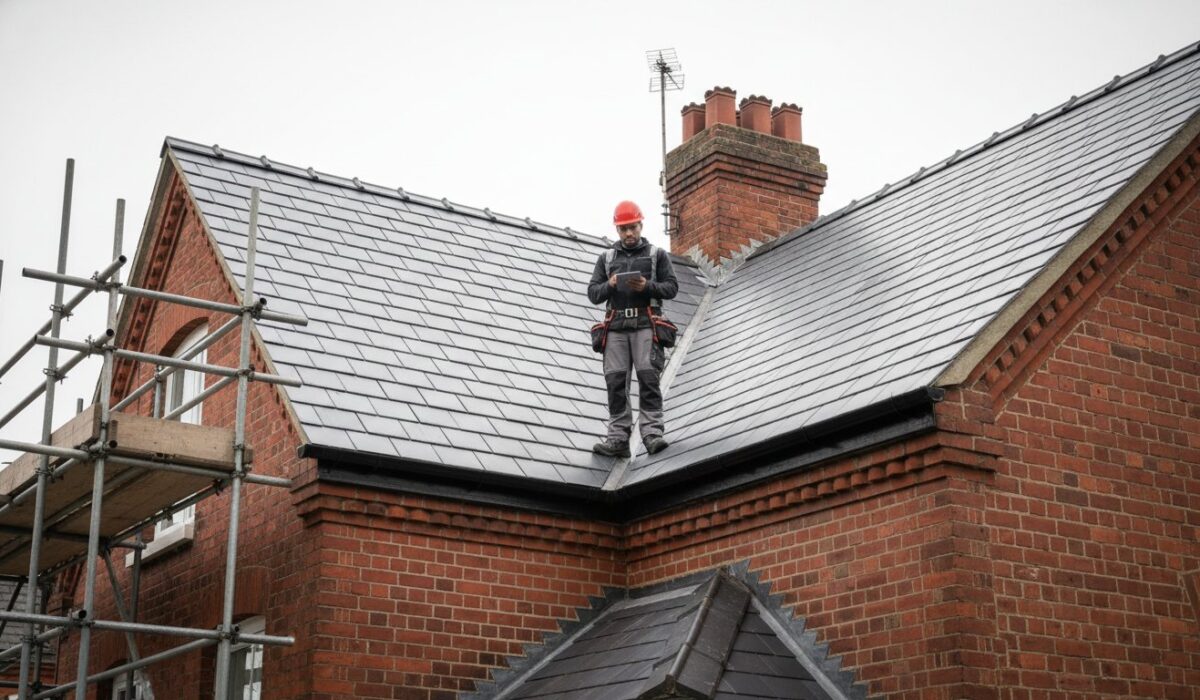
Last winter, a homeowner in West Bridgford watched a minor damp patch transform into a £4,200 structural repair because they couldn’t identify a failing valley gutter. It’s stressful to look up at your home and wonder if your pitched roof is actually weather-tight or just waiting for the next storm to cause chaos. You shouldn’t have to be a surveyor to feel certain that your property is secure, though for a professional opinion, firms like South Surveyors can identify issues before they escalate. We understand that the fear of hidden costs and unreliable contractors can make any home improvement feel like a gamble.
This guide gives you the exact knowledge needed to manage your roofing project with total confidence. You’ll discover how to choose between traditional slate and modern concrete tiles while learning the simple checks that catch damage months before a leak starts. We’ve tailored every detail for Nottingham residents in 2026, covering local material costs, architectural styles, and the essential steps to finding a fully insured expert who stands by their work with a solid guarantee.
Key Takeaways
- Understand why a pitched roof is the architectural standard for Nottingham homes and how its design provides superior protection against the local climate.
- Explore how Nottingham’s history, from Victorian terraces to modern estates in West Bridgford, dictates the most effective roof shapes for your property.
- Compare the structural requirements and aesthetic benefits of traditional slate versus modern concrete tiles to ensure your home remains both durable and stylish.
- Learn how to spot early signs of damage after winter storms and why proactive maintenance is the key to avoiding expensive emergency repairs.
- Discover the vital importance of hiring fully insured local specialists to guarantee your project is completed with precision and professional integrity.
Understanding Pitched Roofs: The Standard for Nottingham Homes
A pitched roof is technically defined as any roof structure with a slope greater than 10 degrees. For homeowners across Nottinghamshire, this design is the most familiar sight on the skyline. It remains the traditional choice for residential properties from West Bridgford to Arnold because it’s built to withstand the specific demands of the UK climate. Archer’s Roofing views these structures as the primary line of defence for your property, providing a durable shield against the elements.
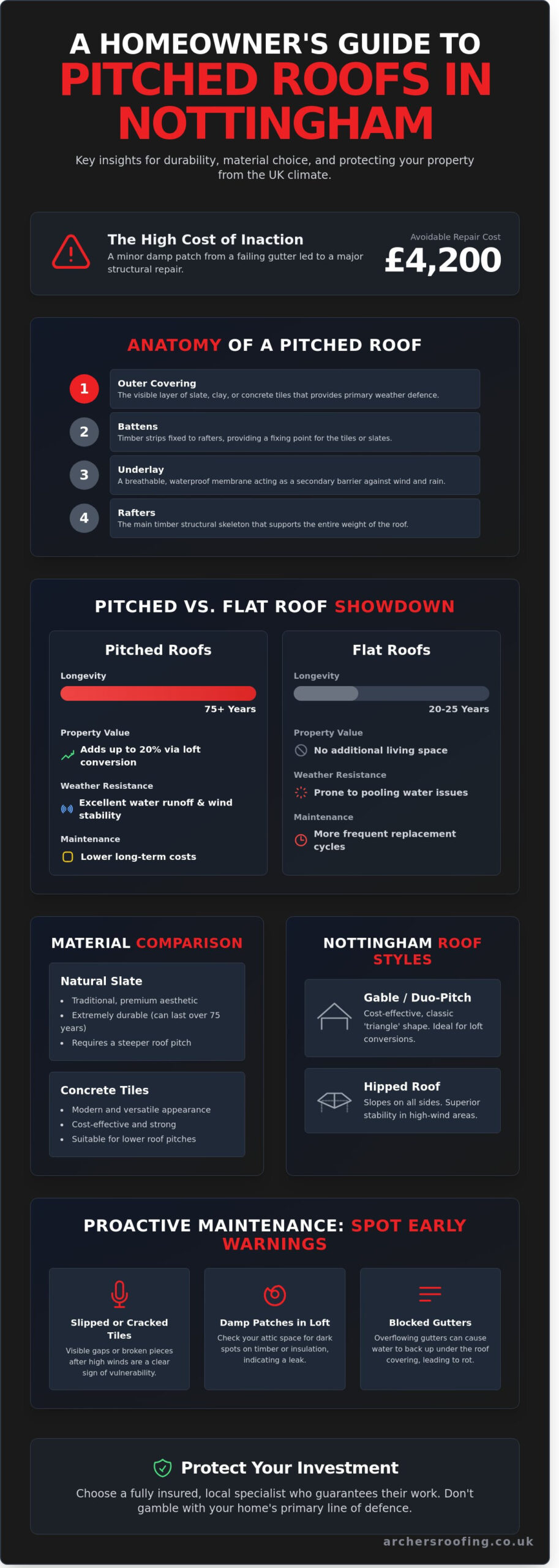
Four primary components work together to ensure the integrity of your roof:
- Rafters: The internal timber beams that form the structural skeleton.
- Underlay: A breathable, waterproof membrane that provides a second layer of protection.
- Battens: Small timber strips fixed to the rafters that hold the outer covering in place.
- Outer Covering: The visible layer of clay tiles, concrete tiles, or natural slate.
The “pitch” or angle of the roof isn’t just an aesthetic choice. It directly dictates how effectively water runs off the surface and determines which materials we can use. For instance, natural slate typically requires a steeper angle to remain watertight, whereas modern interlocking concrete tiles can often be installed on lower slopes. Understanding these common roof shapes is essential when planning a replacement or repair, as the pitch affects both the weight of the structure and the overall cost of materials.
The Functional Benefits of a Sloped Design
Nottingham receives an average of 60mm to 70mm of rainfall every month. A sloped design ensures this water drains away immediately into the guttering system, preventing the pooling issues often found on flat surfaces. In high-wind areas like Mapperley Top, the weight and aerodynamics of a pitched roof provide superior stability. The internal void also creates natural ventilation. This airflow is vital for preventing dampness and timber rot in your loft space, keeping your home healthy and dry. Our installations are always fully insured and guaranteed to provide this essential protection for decades.
Pitched Roofs vs. Flat Roofs: An Overview
Most Nottingham residents prefer a pitched design for their main home due to its impressive longevity. A well-installed slate roof can last over 75 years, whereas flat roofing systems often require replacement every 20 to 25 years. While the initial installation for a pitched system is higher, often costing between £6,000 and £15,000 for a standard semi-detached home in 2026, the long-term maintenance costs are lower. Additionally, a pitched design offers the potential for future loft conversions. This can add up to 20% to your property’s market value, providing a versatile space that flat roofs simply cannot match. We provide a free, no-obligation quote to help you weigh up these long-term investment benefits for your specific property.
Common Pitched Roof Shapes and Architectural Styles in Nottingham
Gable and Duo-Pitch Designs
The gable roof remains the most frequent choice for Nottingham homeowners. Its simple two-sided slope creates the familiar triangle shape seen throughout West Bridgford. This design is cost-effective because it requires fewer complex cuts and less timber than more intricate styles. It’s also the ideal choice if you’re planning a loft conversion. The vertical gable walls allow for easy installation of Velux windows or traditional dormers. However, these ends are exposed to regional winds. Proper Pitched Roof Construction techniques ensure these high-pressure areas are securely braced against the elements.
Hipped Roofs and Their Stability
For properties in elevated areas like Mapperley, hipped roofs are a superior choice. Unlike gables, a hipped roof slopes on all four sides. This aerodynamic shape provides excellent resistance to storm damage, as wind pressure is distributed more evenly across the structure. While they offer better stability, they require more intricate workmanship. The junctions where the slopes meet need specialised leadwork and ridge tiles to prevent leaks. Many detached homes built between 1930 and 1950 in Nottingham’s suburbs utilise this style for its sturdy, balanced appearance.
Local Planning and Conservation Areas
If your home is located in one of Nottingham’s 31 conservation areas, such as The Park or the Lace Market, your choice of pitched roof is often strictly regulated. Nottingham City Council typically requires a like-for-like replacement of materials to preserve the historical aesthetic. For urban renovations where space is at a premium, Mansard or Gambrel styles can maximise internal head height by using two different slope angles. You’ll likely need planning permission if you intend to change the pitch or height of your roof significantly. Our team can help you navigate these local requirements with a free, no-obligation quote to ensure your project meets all building standards and protects your investment.
Materials and Durability: Choosing the Right Covering
Selecting the right material for your pitched roof involves balancing aesthetics, budget, and structural capacity. Every choice carries a different weight profile that your home’s frame must support. For instance, a natural slate covering weighs between 30kg and 45kg per square metre, whereas heavy-duty concrete tiles can exceed 50kg. If you’re switching from a lightweight material to a heavier one, we’ll need to verify that your timber rafters can handle the increased dead load without sagging. Understanding the full process of roof slating and tiling — including technical considerations like headlap, gauge, and the latest energy efficiency standards — can help you make a more informed decision before committing to a material.
Durability varies significantly across the 2026 market. While some modern options offer a 30-year lifespan, traditional materials often double or triple that figure. Investing in a higher-quality covering often reduces the long-term cost of ownership by eliminating the need for a full replacement in your lifetime. We provide a guaranteed, professional installation for all the following materials to ensure your home stays protected against the unpredictable East Midlands weather.
Traditional Slate Roofing
Natural slate offers a timeless appeal that suits heritage Nottingham homes in areas like The Park or Mapperley. It’s incredibly durable and naturally fire-resistant. A well-installed slate roof can easily last over 100 years. Because slate is a natural stone, it requires precision during installation. We always integrate high-quality leadwork around chimneys and valleys to prevent leaks. In 2026, natural slate typically costs between £110 and £160 per square metre, reflecting its status as a premium, long-term investment. For homeowners weighing their options, our comprehensive slate roof guide for Nottingham comparing natural and man-made options provides detailed cost analysis and performance comparisons to help you make the right choice for your property.
Concrete and Clay Tiles
Clay tiles are the best way to achieve the classic “Nottingham Red” appearance seen on Victorian terraces. They’re colour-fast and last roughly 60 to 80 years. Concrete tiles provide a more cost-effective alternative, priced at approximately £50 to £85 per square metre. They’re highly versatile and come in various profiles. We often recommend interlocking concrete tiles for faster projects. These designs can reduce installation time by 20% compared to traditional plain tiles, which helps lower your total labour costs.
Modern Synthetic and Lightweight Options
Composite slates made from recycled polymers have become a popular choice for 2026 homeowners. They’re much lighter than stone, weighing around 12kg per square metre. This makes them ideal for timber-framed extensions or older structures with limited load-bearing capacity. These synthetic options are easy to maintain and won’t crack during heavy frosts. If you’re focused on sustainability, we also install eco-friendly tiles that meet the 2025 Future Homes Standard, helping you reduce your property’s carbon footprint while securing its future.
- Natural Slate: 100+ year lifespan; premium aesthetic; requires expert leadwork.
- Clay Tiles: 60-80 year lifespan; iconic local colour; mid-range pricing.
- Concrete Tiles: 40-50 year lifespan; budget-friendly; quick interlocking installation.
- Synthetic Slate: 40-year guarantee; lightweight; perfect for modern extensions.
Choosing the right material is a big decision, but you don’t have to make it alone. We offer a free, no-obligation quote to help you weigh up the costs and benefits for your specific property. Our team is fully insured and ready to provide the reliable advice you need to protect your investment for decades to come.
Essential Maintenance: How to Identify and Prevent Damage
Nottingham weather is famously unpredictable. After the record-breaking rainfall seen in early 2024, many local properties in areas like Beeston and West Bridgford showed signs of significant wear. Your pitched roof is your home’s first line of defence, yet it often suffers from “out of sight, out of mind” neglect. This is a dangerous approach. A single slipped tile can allow over 5 litres of water into your loft during a typical British downpour. This moisture doesn’t just evaporate; it attacks your structural timbers. Untreated damp can lead to dry rot in less than 6 months, potentially turning a simple £150 tile fix into a £3,500 structural overhaul.
- Inspect your roof after every major storm to catch issues early.
- Clear gutters and valleys twice a year to prevent water back-flow.
- Check that fascias and guttering remain free from soft spots or rot.
Warning Signs Every Homeowner Should Know
You don’t need a ladder to spot trouble. Use a pair of binoculars to scan your roof from the pavement. Look for tiles that are sitting at odd angles or visible gaps in the rows. Inside your home, visit the loft during a bright day. If you see “daylight” through the felt or dark damp patches on the rafters, you have a breach. Check the lead flashing around chimneys and valleys too. Cracks in the leadwork are common entry points for water that can go unnoticed for months.
Common Issues: Ridge Tiles and Pointwork
Ridge tiles sit at the highest point of your pitched roof and bear the brunt of Nottingham’s freeze-thaw cycles. Water enters small cracks in the mortar, freezes, and expands. This process eventually breaks the bond. Traditional mortar pointwork typically lasts between 10 and 15 years before it requires attention. We often compare traditional bedding with modern dry-fix systems. While re-pointing is cost-effective for minor wear, a dry-fix system provides a mechanical grip that is far more resilient against high winds and driving rain.
Storm Damage and Emergency Repairs
When a storm causes visible damage, take photos immediately. This evidence is vital for insurance purposes to prove the date and extent of the incident. Don’t attempt to climb onto the roof yourself in wet or windy conditions. A professional can install a temporary waterproof cover to prevent further internal damage. These patches are only short-term solutions. You must follow up with permanent, professional repairs to maintain your home’s structural integrity and ensure your insurance policy remains valid for the long term.
Professional Pitched Roof Installation: Why Local Expertise Matters
Choosing the right contractor is a decision that protects your home for the next 40 to 60 years. In Nottingham, hiring “cowboy” roofers who lack local references or valid insurance often results in catastrophic structural failures. These rogue traders frequently leave homeowners with bills exceeding £5,000 to rectify poor workmanship within just 12 months of installation. A professional pitched roof replacement follows a strict, logical timeline. You should expect a clear schedule, starting with scaffolding assembly and ending with a thorough site clearance. Archers Roofing manages every stage with precision, ensuring your daily routine remains undisturbed while we secure your property against the elements. To protect yourself from unreliable traders, our guide to choosing the best roofing contractors in Nottingham outlines exactly what to look for when evaluating local expertise and credentials.
The Importance of Being Fully Insured
Public liability insurance is a non-negotiable requirement for any roofing project. It protects your property and your neighbours if an accident occurs during the build. Archers Roofing maintains comprehensive coverage, ensuring you aren’t held liable for unforeseen mishaps. Professional accreditation serves as your safety net. We prioritise safety by strictly adhering to the Work at Height Regulations 2005. This commitment to high-quality workmanship means we never cut corners on safety equipment or structural integrity.
Getting a Transparent, No-Obligation Quote
A reliable quote must be detailed and fixed. It should clearly specify the costs for:
- High-quality clay or concrete tiles
- Breathable membranes and treated timber battens
- Professional labour and specialist leadwork
- Waste removal and skip hire fees
Archers Roofing provides these comprehensive quotes within 24 hours of our initial inspection. When you compare prices, look beyond the bottom line. A quote that is 20% lower than the market average often indicates a lack of insurance or the use of inferior materials that won’t survive a harsh East Midlands winter. We believe in honest pricing that reflects the true cost of a roof built to last.
The Archers Roofing Guarantee
Peace of mind comes from a long-term commitment to quality. We provide robust guarantees on all new pitched roof installations, reflecting our confidence in every tile we lay. Archers Roofing has served homeowners across Nottingham, Leicestershire, and Derbyshire since 2001. We’ve built our reputation over 25 years by being a dependable, community-oriented business. We take personal pride in our work and remain available long after the project is finished to support our customers.
Securing Your Nottingham Home for the Years Ahead
Investing in a high-quality pitched roof is one of the most significant decisions you’ll make for your property. Choosing durable materials like slate or clay tiles ensures your home remains weather-tight against the East Midlands climate. Regular inspections are essential to prevent minor leaks from becoming expensive structural issues. By understanding the specific architectural needs of Nottingham neighbourhoods, you protect both your family and your financial investment.
Archer’s Roofing has served the local community since 2001. We bring over 25 years of local experience to every project. Our team is fully insured, and all work comes with a comprehensive guarantee. We provide transparent quotes within 24 hours of a site inspection, so you can make informed decisions without the wait. Whether you need a minor repair or a complete replacement, our honest craftsmen are ready to help.
Get a Free, No-Obligation Quote in Nottingham
Your home deserves the protection of a roof built to last. We look forward to helping you secure your property’s future today.
The principles of quality roofing apply universally, and it can be helpful to see examples of professional standards from other regions. Established contractors, such as Rainier Roofing LLC, often showcase portfolios that serve as a great benchmark for the high-quality workmanship and service you should expect from any roofer you consider hiring.
Frequently Asked Questions
How long does a pitched roof typically last in the UK?
A well-maintained pitched roof typically lasts between 60 and 100 years in the UK. Natural slate often reaches the 100-year mark, while modern concrete tiles usually require professional attention after 50 or 60 years. Our team ensures every installation uses high-grade breathable membranes to prevent timber rot. This long-term longevity protects your Nottingham home for generations and provides total peace of mind.
Do I need planning permission to change from a flat roof to a pitched roof in Nottingham?
You usually need planning permission from Nottingham City Council if you increase the roof height or change the shape significantly. Converting a flat roofing system to a pitched roof falls under Permitted Development rules only if the new ridge is not higher than the existing highest part of your house. We recommend checking with the local planning office or our expert team before starting any major structural changes to your property.
Which is better for a Nottingham home: slate or clay tiles?
Natural slate is the superior choice for longevity and aesthetics in Nottingham, often lasting over 80 years. Clay tiles offer a classic regional look and typically last 50 to 60 years before they need replacing. We find that slate handles the local damp climate effectively because it has a water absorption rate of less than 0.3 percent. Both options provide excellent protection when installed by our fully insured craftsmen. For a detailed comparison of all available slate roof options including modern synthetic alternatives, we recommend reviewing the specific benefits and costs for your property type.
How much does a new pitched roof cost in 2026?
A new pitched roof for a standard three-bedroom semi-detached home in Nottingham costs between £8,000 and £12,500 in 2026. This price includes scaffolding, skip hire, high-performance felt, and new treated timber battens. Prices vary based on whether you choose standard concrete tiles or premium Welsh slate. We provide a free, no-obligation quote to give you an exact figure for your specific property and budget.
Can I install solar panels on any type of pitched roof?
You can install solar panels on almost any pitched roof provided the internal structure is sound and the material isn’t too brittle. Modern mounting systems work perfectly with slate, clay, and interlocking concrete tiles. We inspect your roof timbers first to ensure they can support the additional 15kg per square metre weight of a standard solar array. This ensures your home stays energy-efficient and remains structurally secure for years.
What is the minimum pitch required for a tiled roof?
The minimum pitch for a standard interlocking concrete tile is 15 degrees, while most plain clay tiles require a steeper 35-degree slope. If your roof is flatter than 15 degrees, you’ll need specialised low-pitch tiles or a different roofing system entirely. Our surveyors measure your exact gradient to ensure your tiles shed water correctly. This prevents leaks during heavy East Midlands downpours and protects your internal ceilings from damp.
How do I know if my roof ridge tiles need repairing?
You know your ridge tiles need repair if you spot visible gaps in the mortar or find pieces of cement in your gutters. High winds often loosen these top-level tiles, creating a serious risk of water ingress. We use modern dry-ridge systems for most repairs now. These systems are mechanically fixed and guaranteed to withstand 50mph gusts without the cracking issues associated with traditional mortar pointwork.
Should I repair or replace my old pitched roof?
You should replace your roof if more than 25 percent of the tiles are damaged or if the underlying felt has perished. Frequent leaks often indicate that the internal structure is failing and a patch repair won’t suffice. A simple repair is suitable for minor storm damage or a few slipped slates. We offer honest advice and a reliable assessment to help you decide which path protects your home and your investment best. When selecting who carries out that work, reviewing our advice on finding trusted roofing contractors in Nottingham can help you avoid costly mistakes and ensure the job is done right first time.