Contents
- What the guarantee covers: design, materials and installation workmanship
- Guarantee exclusions and circumstances that may void cover
- How should specifier approach roofing guarantees?
- Coverage for flat, pitched and combined roofing
- Archers Roofing Services: Pitched Roofing
- Make your next roofing decision with confidence
- Frequently Asked Questions
A roofing work guarantee can be useful when you sell your home, but its value depends on the written cover and whether it remains in force. What it covers depends on the terms: protection may apply to installation faults, defective materials, or both, while wear and accidental damage are commonly excluded. The cover period also varies by roof type and material.
We understand that a guarantee should offer reassurance after roofing work. Typical periods range from 10-15 years for flat felt or asphalt roofs and 15-25 years for EPDM flat roofs; pitched tile or slate replacement workmanship guarantees typically last 10-30 years.
This guide explains how workmanship and material cover differ, what can exclude or void a guarantee, and why the details matter when specifying a flat, pitched or combined roof. It also looks at the paperwork that can help when you sell your home, so you can understand the protection you have and what it means for the next owner.
What the guarantee covers: design, materials and installation workmanship
Roofing guarantees may cover installation faults, defective materials, or both. To understand what a roofing work guarantee covers, read the written terms and identify which repair costs are included.
Defective Materials and Workmanship
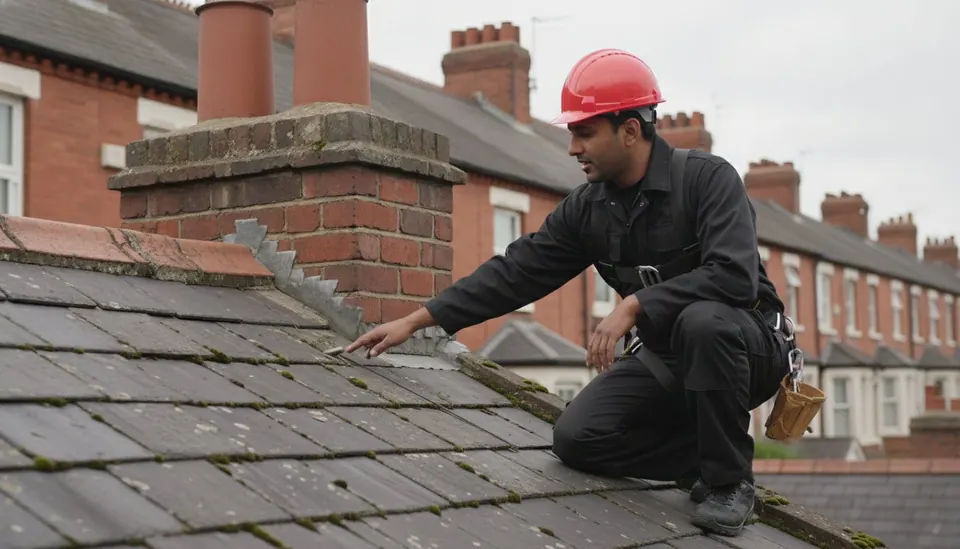
A workmanship guarantee relates to faults caused by installation; a material warranty concerns defects in supplied products. This distinction matters because the cause of a leak can affect which cover applies. Incorrectly fitted slates or poorly finished flashing may point to an installation fault, while premature cracking may indicate a manufacturing defect.
If paid roofing work is faulty, describe the problem to the roofer in writing and keep the quotation, guarantee and photographs. These records help show what work was agreed and what has failed.
Remedial Work Costs
Remedial cover sets out who pays to correct a fault and which repair costs are included. A workmanship guarantee may cover labour to fix a leak caused by improper installation, while some terms exclude related costs such as scaffolding or additional labour. Check the wording for repair methods, replacement materials and excluded expenses to see which costs may remain yours.
Check how the terms treat faults affecting several components. An enhanced system warranty may cover replacement of the complete roof system if one component fails, while other cover may apply only to the faulty part.
Material Warranties and Manufacturing Defects
We distinguish a manufacturer’s warranty from installation cover: it generally addresses product defects, such as premature splitting, cracking or failure, rather than poor fitting. Standard material warranties in the UK usually last between 10 and 30 years; manufacturer guarantees for roof tiles or slate typically last 30-40 years. Check the product paperwork for the applicable terms.
Some extended warranties combine material and installation cover and may include labour. Cover for both may require an approved installer. Natural slate can vary in colour or dimensions, and these variations generally aren’t treated as defects, so appearance alone may not qualify for a claim.
How long do roofing work guarantees last in the UK? Contractor workmanship guarantees typically last 1 to 10 years, while material cover depends on the product and terms. We recommend checking the stated duration and when it starts.
Does a roofing guarantee cover leaks, storm damage or defective materials? A leak caused by incorrect installation or a manufacturing defect may qualify, while later storm damage is commonly excluded. Compare the cause with the guarantee wording.
How can you check whether a roofer’s guarantee is backed by insurance? Look for an insurance-backed guarantee certificate and read the insurer, cover period, exclusions and claim process. CORC says its insurance-backed guarantee requires the company guarantee to remain in place alongside it.
What should a written roofing work guarantee include? Check for the exact work, cover period, covered faults, exclusions and claims process. Keep the document with the quotation and material warranty.
For flat roofs, we distinguish felt or asphalt guarantees, which typically last 10-15 years, from EPDM, a synthetic rubber roofing membrane, with guarantees typically lasting 15-25 years. We also recommend checking the membrane surface, joints and drainage. Existing damage or standing water may affect whether a fault relates to installation or later deterioration.
Guarantee exclusions and circumstances that may void cover
A guarantee has boundaries: a roof leak caused by poor installation differs from damage that happens after the work is complete. For example, a storm-damaged tile may fall outside workmanship cover, even if the original installation remains sound.
Weather and Storm Exclusions
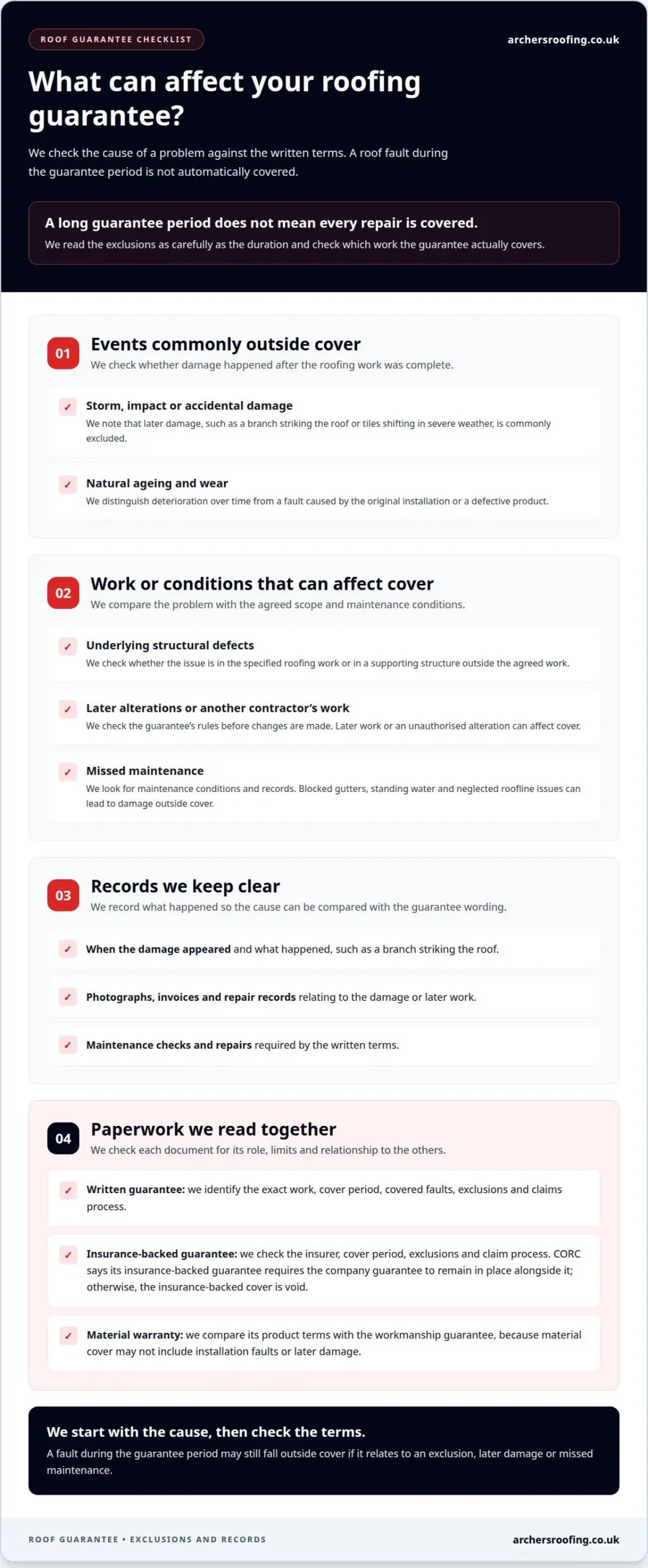
Storm, impact and accidental damage after completion are commonly excluded from roofing warranties. A roof can develop a problem during the guarantee period without that problem being caused by the original work.
Record when the damage appeared and what happened, such as a branch striking the roof or tiles shifting in severe weather. Keep photographs and repair records together. These details can help distinguish a later event from a fault in the installation work.
Common Exclusions from Cover
Common exclusions include natural ageing, wear, underlying structural defects outside the agreed work, and damage caused by later alterations. A guarantee usually relates to the specified work, not every part of the property or every future roof repair.
For example, a guarantee for replacement roof coverings may not cover a defect in the supporting structure. It may also exclude damage caused by another contractor who later alters the roof.
Maintenance matters, too. Blocked gutters, standing water and neglected roofline issues can cause damage that falls outside cover. Routine maintenance failures may void a warranty, so follow the maintenance conditions in the written terms and keep records of checks and repairs.
Before arranging work by another contractor, compare the proposed task with the guarantee’s rules on alterations. An unauthorised change can affect cover, even if it seems minor. Keep invoices and a written description of any work carried out to help establish the cause of a later fault.
Check exclusions alongside the guarantee period, not as an afterthought. A material warranty may run for 30 years, yet still exclude installation faults, later storm damage or missed maintenance. A long period does not mean every repair is covered.
Read how separate guarantees interact. CORC says a company guarantee must run alongside its insurance-backed guarantee; otherwise, the insurance-backed cover is void. Both documents matter, and the insurance policy does not replace the roofer’s written guarantee.
If a leak or damaged section needs attention, keep a clear record of the issue and any work already carried out. For a roof fault that needs repair, roof repair support can help you address the immediate problem while preserving useful details about its cause.
How should specifier approach roofing guarantees?
Specify the roof work and guarantee together, so the documents clearly describe the installation, materials and protection. Building approval and guarantee cover are separate matters, and neither document replaces the other.
Roof Guarantees and Building Regulations
A roofing guarantee sets out agreed contractual protection, while building regulations approval concerns compliance with applicable requirements. Approval alone does not promise repairs if a roof later develops a covered defect.
According to UK Government, the Building Regulations 2010 are relevant to whether certain UK roof work requires building regulations approval. Like-for-like replacement of roof coverings on an existing structure normally doesn’t need approval. Work that changes the structure, adds or upgrades insulation, or forms part of a larger project may require it.
For re-covering or repairs, the research identifies thresholds that can make a building control application necessary: more than 50% of the roof affected, more than 25% of the total building envelope affected, or a roof covering that increases the roof’s weight by 15% or more. Structural alterations and a covering that responds differently in a fire are also listed. These tests concern the project, not the length of its guarantee.
Legal Enforceability of Guarantees
A roofing guarantee is a written promise whose terms define the work, cover and remedy. Clear wording helps show what the roofer agreed to provide if a covered fault occurs.
Are roofing guarantees legally enforceable in the UK? A written guarantee can provide evidence of the roofer’s promise, but its terms determine what remedy applies. Insurance-backed guarantees aren’t required by law, and installers aren’t required to offer them.
Before agreeing to the work, make sure the paperwork names the exact scope, cover period, covered faults, exclusions and claims process. Keep the quotation and final guarantee together. If the agreement is entirely verbal, proving the promise can be harder.
Check whether the guarantee protects workmanship alone or both labour and materials. A combined warranty may require an approved contractor or manufacturer-approved installer. If so, the installer’s status is a condition of cover, not just a preference about who carries out the work.
An insurance-backed guarantee can protect you if the roofer stops trading and can’t honour the original written guarantee. Read its certificate for the insurer, duration, exclusions and claim steps. CORC insurance-backed guarantees provide 10 years of continuous cover; CORC also says the company guarantee must run alongside it.
Since June 2014, schemes such as the National Federation of Roofing Contractors have required financial protection for applicable domestic roofing installations. This applies to scheme requirements, not a general legal duty for every roofer. A guarantee’s value therefore depends on its terms and any backing that continues if the contractor ceases trading.
For a roof specification, record the covering, installation scope and any approved-installer condition before work begins. These details make it easier to compare guarantees and establish whether a later fault falls within the agreed cover.
Coverage for flat, pitched and combined roofing
Guarantee terms can differ across a single property because flat and pitched sections use different roofing materials. Compare cover by roof area, material and installation scope, rather than relying on one headline period.
Flat roofs
For felt or asphalt flat roofs, guarantees typically last 10-15 years. EPDM rubber membrane guarantees typically last 15-25 years. These periods describe typical cover, not automatic protection against every type of damage.
Read the terms for the membrane, joints, edges and drainage details. A leak near a joint, for example, may relate to installation, while damage from a later impact may be excluded. Check whether the guarantee covers workmanship, materials or both, and whether it includes labour for remedial work, as repair costs can be treated differently.
Pitched roofs
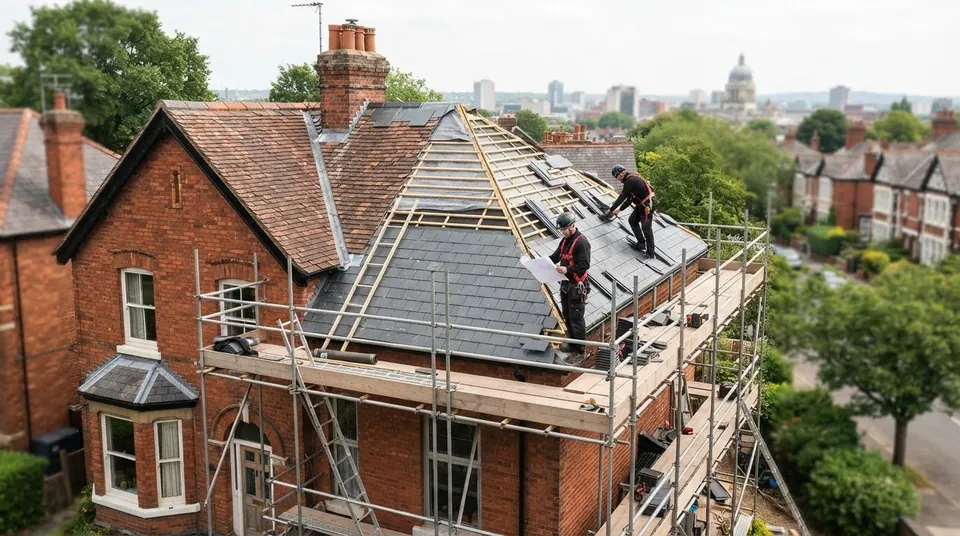
Pitched roof tile or slate replacement workmanship guarantees typically last 10-30 years. Coverage can relate to how tiles or slates were fitted, as well as ridge, verge and flashing details. Each area has a distinct role in keeping water out, so a written scope should identify which sections were replaced or repaired.
Material cover is separate from installation cover. A manufacturer’s warranty may address defective roofing materials, while a workmanship guarantee relates to fitting. If tiles crack prematurely, the material terms may apply; if water enters around incorrectly fitted flashing, the installation terms may be more relevant.
Combined roofs
A building with both roof types needs clear boundaries in its documents. For example, a rear extension might have an EPDM-covered flat roof joined to a pitched slate section. The specification should identify each area, its roofing materials and the work completed there. This helps show which terms apply if a fault appears at the junction.
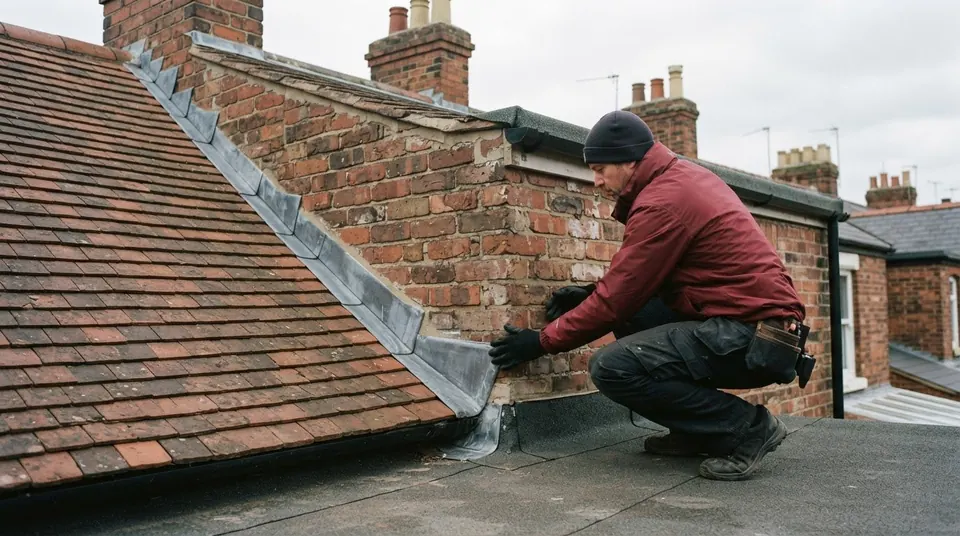
Check how any backed guarantees treat shared details, such as abutments where a flat roof meets a wall or pitched roof. These transitions can involve different materials and workmanship. A single system warranty may combine material and installation cover, but its terms define which components and labour are included.
Compare the written scope, cover period and exclusions for each roof section. For a flat roof, note the membrane type; for a pitched roof, record whether the work covers tiles, slates or specific details. This gives you a clearer basis for understanding what protection applies, especially when selling a property.
If you’re planning work across flat and pitched sections, discuss your roof requirements and how the work will be set out in writing.
Archers Roofing Services: Pitched Roofing
Archers Roofing Services Ltd installs and repairs pitched roofs and carries out flat roofing work. Clear written details about the work help you understand which roof areas and workmanship the roofing work guarantee what it covers entails.
The company also carries out Leadwork and Guttering, Fascias & Soffits, which can be relevant when roof edges, drainage or junctions need attention alongside a roofing project. For homeowners and commercial property owners in Nottingham, clearly documenting the work helps you keep useful records for future maintenance or a home sale.
If you’re planning roofing work, contact Archers Roofing Services Ltd to discuss your requirements or visit archersroofing.co.uk.
Make your next roofing decision with confidence
A roofing project is also an opportunity to make future decisions easier. Keep the roof’s key records together and update them whenever work or changes take place. This creates a useful history for planning maintenance, discussing repairs or preparing property information for a future sale.
Understanding what a roofing work guarantee covers can help you decide whether proposed work suits your property and priorities. If your roof needs attention, choose a clearly defined scope and keep the paperwork accessible. Archers Roofing Services carries out Pitched Roofing, Flat Roofing and Leadwork for property owners who need practical help with their roofs.
If you’re considering roofing work in Nottinghamshire, Leicestershire or Derbyshire, contact Archers Roofing Services to discuss your requirements. A straightforward conversation can help you take the next step with a clearer plan for your property.
Frequently Asked Questions
Can a roofing guarantee help when selling your home?
Yes, current guarantee paperwork can help a buyer understand the roof’s repair history and any remaining cover. Keep the original documents with invoices, completion records and relevant inspection details, then include them with the property information provided during the sale. A guarantee doesn’t prove that every part of the roof is defect-free, but clear records explain what work was completed and what protection may continue.
Can blocked gutters or poor maintenance affect cover?
Yes, blocked gutters or neglected maintenance can contribute to damage that falls outside a guarantee. For example, water overflowing from a blocked gutter may affect roof edges or adjoining walls rather than indicate a fault in the original roof work. Keep dated records of maintenance and repairs, with photographs where useful. These can help show the roofline’s condition before a later problem appeared.
Does a roof guarantee transfer to a new owner?
Some guarantees can transfer, but the transfer terms matter. A CORC insurance-backed guarantee is transferable if the property is sold during its 10-year cover period. An enhanced manufacturer’s warranty may also transfer to a new homeowner. Keep the certificate and check its transfer wording and any required process before completion, so the buyer receives the relevant documents and understands which cover remains in force.
Is this issue actually covered?
Match the fault to the work and wording recorded in your guarantee. Note where the problem appears, when it began and whether anything changed beforehand, such as a later repair or impact. Then compare those details with the covered work, exclusions and claim process. For example, a fault at a repaired roof junction may relate to the agreed installation, while damage elsewhere may concern a separate roof section.
What does a UK roofing workmanship guarantee cover?
A UK roofing workmanship guarantee concerns faults linked to the roofer’s installation work during the period stated in its terms. It may address a leak caused by incorrectly fitted tiles or a poorly finished roof detail. The written scope matters: a guarantee for one repaired section doesn’t automatically cover untouched parts of the roof. Keep the document with the quotation and completion records.
What is the difference between a roofer’s workmanship guarantee and a manufacturer’s warranty?
A roofer’s workmanship guarantee relates to installation; a manufacturer’s warranty relates to defects in roofing materials. If a slate cracks because of a product defect, the manufacturer’s terms may be relevant. If water enters because the slate was fitted incorrectly, the roofer’s guarantee may apply instead. Keep both documents, since a repair can involve identifying whether the cause lies with the product or its installation.