
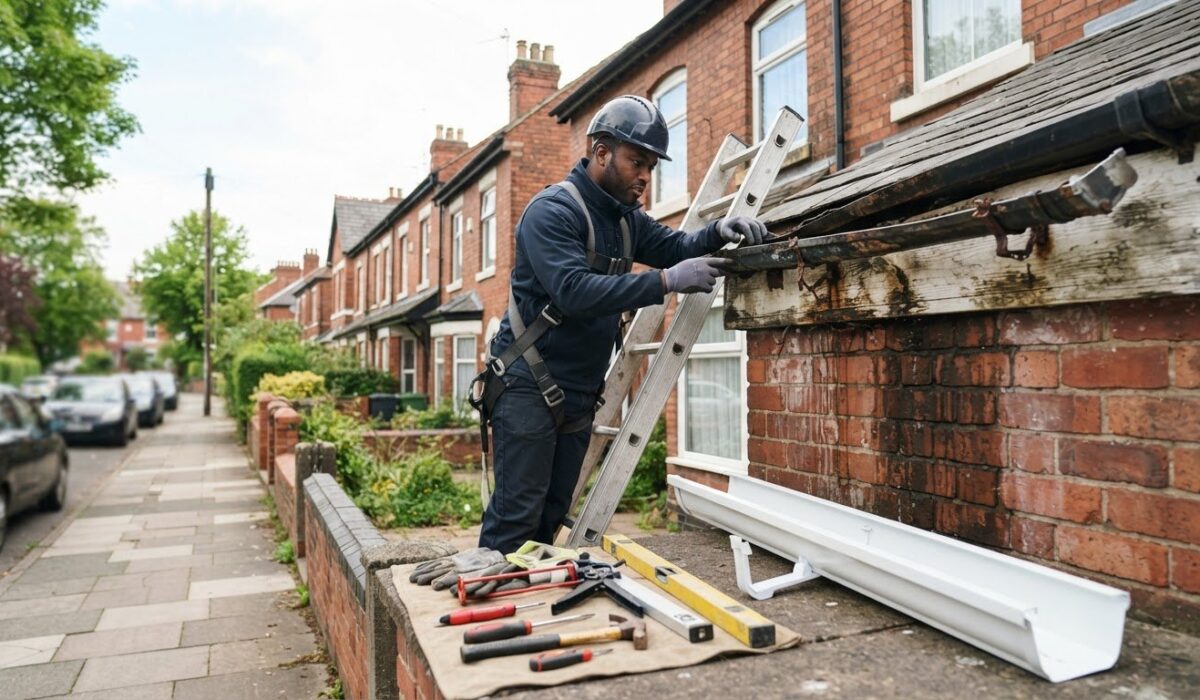
A gutter can look repairable and still be nearing the end of its life. The clearest signs gutters need replacing include large cracks or splits, persistent leaks, rust, and sections that sag or pull away from the roofline. A crack can be a sign that a gutter needs attention, particularly if it is getting worse.
It’s understandable to wonder whether a repair will solve the problem or only postpone it. A loose bracket or damaged section may be repairable, while widespread deterioration or repeated failures can be signs gutters need replacing.
This guide explains how to spot gutter damage, water stains and sagging, and how to assess the whole system when choosing between repair and replacement. You’ll also learn which problems may have a simple cause, such as a blockage, and which need closer attention to help protect your property from rainwater damage.
Key Takeaways
- Large cracks, splits, rust and holes can point to gutter damage that goes beyond a simple fix.
- Water marks, mould or peeling paint near the roofline can help reveal where rainwater is escaping.
- Sagging may stem from debris or loose brackets, so identify the cause before deciding what work is needed.
- A sound system with one isolated fault may be repairable; widespread wear or recurring problems can favour replacement.
- Compare the condition of the whole gutter run, not just the most visible damaged section, when weighing your options.
1. Gaps, cracks and holes in gutter sections
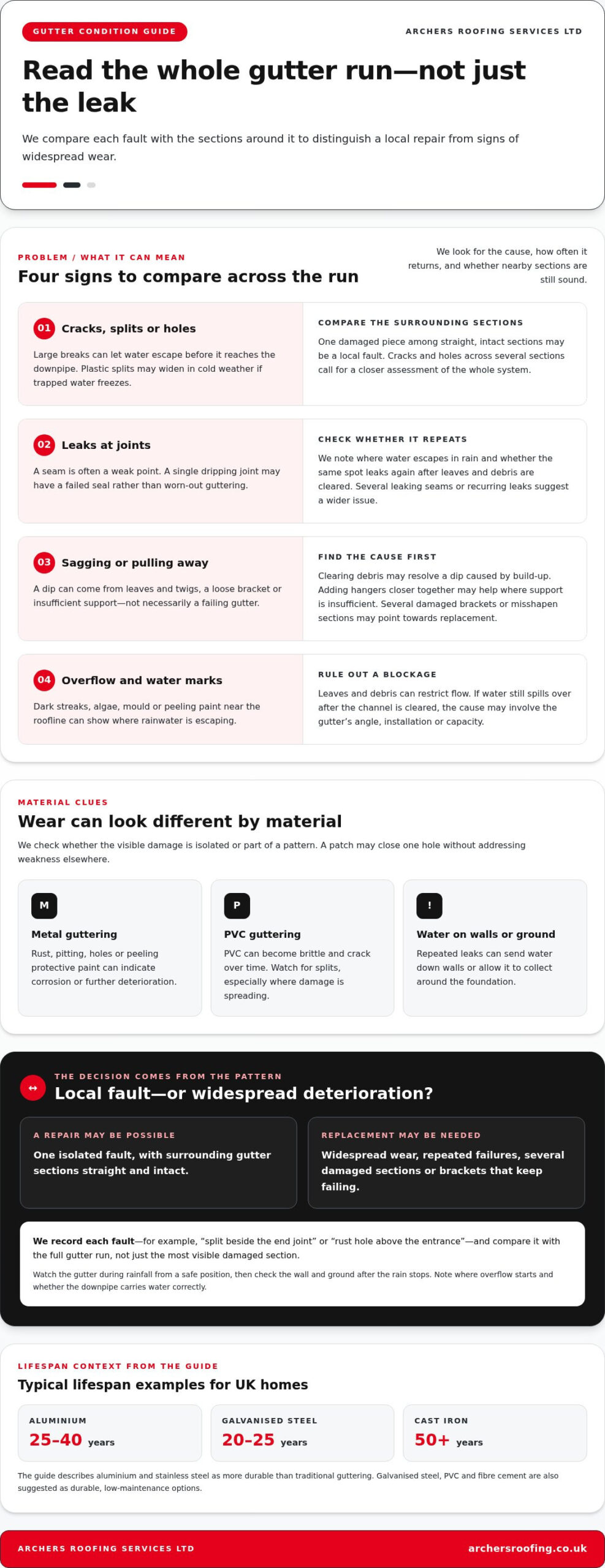
Material choice affects how guttering handles wear in UK weather. Aluminium and stainless steel are described as more durable than traditional guttering, while galvanised steel, PVC and fibre cement are also suggested as durable, low-maintenance options. For context, aluminium gutters in UK homes typically last 25-40 years, galvanised steel 20-25 years, and cast iron 50+ years.
Look closely at every section for cracks, splits, holes and gaps, especially after heavy rain. A small split in a plastic section can widen during cold weather when trapped water freezes. Large cracks or splits may mean that a gutter section needs replacing. A hole or large break can let water escape before it reaches the downpipe.
Check the joints too. Seams are often the weakest points, so a leak at one joint may come from a failed seal rather than worn-out guttering. If one connection drips but the surrounding sections remain straight and intact, the fault may be local. If several seams leak or cracks appear along multiple sections, assess the system’s overall condition more closely.
Metal gutters can show rust, pitting and holes, which may indicate corrosion. Peeling protective paint can expose the metal to further deterioration. PVC gutters can become brittle and crack over time. These material-specific changes matter because a patch may close one hole without resolving corrosion or weakness elsewhere.
Recurring leaks are more concerning than a single isolated drip. Note where water escapes during rain, then check whether the same spot leaks again after leaves and debris are cleared. Pooling beneath a joint, damp marks on nearby masonry or water spilling from several sections can show that the gutter is no longer directing rainwater away effectively.
From ground level, inspect visible sections for pulling away, warped edges and daylight showing through gaps. Compare the damaged area with the adjoining sections: one cracked piece surrounded by sound guttering differs from cracks and holes spread across the run. Guttering’s role in protecting a property is to carry rainwater away from walls and foundations, so repeated leaks can contribute to water damage.
Record the location and type of each fault, such as “split beside the end joint” or “rust hole above the entrance”. This helps distinguish a local repair from widespread deterioration. Large breaks need prompt attention, and even small cracks are worth monitoring because they can grow, particularly in colder weather.
2. Peeling paint and exterior water stains
Water marks beneath the roofline can show where rainwater is escaping. Look for dark streaks, algae, mould or peeling paint on exterior walls near a gutter. These marks often appear below joints, corners or downpipe connections. Compare the affected area with nearby walls after rainfall. A stain that returns in the same place needs attention, especially if the gutter above is overflowing.
Peeling paint on a gutter can also reveal wear. On galvanised steel, flaking paint may mean water has breached the protective coating and reached the metal. Bubbling or peeling paint can leave metal more vulnerable to rust. On other gutter materials, peeling may indicate deterioration. Note whether the damage is limited to one section or appears across several lengths.
Overflow doesn’t always mean the gutter needs replacing. First check for leaves and debris that could block the channel and restrict water flow. If water still spills over after clearing debris, the gutter may have an incorrect angle, faulty installation or insufficient capacity for the roof. Overflow during regular rain, despite a clear channel, points to a problem beyond a simple blockage.
Check where the water goes next. Faulty guttering can send rainwater down walls or allow it to collect around the foundation. Repeated pooling around a property can expose nearby materials to moisture and lead to water damage. Look for damp patches, dark marks or mould on foundation walls, and note whether water gathers beneath a leaking corner after rain.
Use a simple observation routine: watch the gutter during rainfall from a safe position, then inspect the wall and ground once the rain stops. Record whether the overflow came from one joint, the full length or a corner. Note whether the downpipe carried water correctly. These observations help distinguish a local leak from a wider drainage or capacity issue.
A small amount of splash-out during an extreme storm can happen. Regular overflow in ordinary rain is different, particularly when it leaves fresh stains or pooling each time. If water marks are close to the roofline, check whether the water is coming from the gutter or another roof area. Identifying the source matters before deciding what needs attention, as untreated leaks can lead to costly exterior damage.
When water staining appears near a roof edge, the source may involve drainage or the roof covering. Our pitched roofing work addresses roof-related concerns that can affect how rainwater reaches the gutter.
3. Sagging gutters and failing brackets
Sagging or pulling-away gutters may be repairable if the material remains sound. A blocked channel, loose bracket or isolated failed fixing could be the cause. Replacement may be needed when several sections are damaged, brackets keep failing or the gutter has become misshapen.
Start by looking along the gutter from the ground. A straight run should not visibly dip between its supports. Note where the sag begins and ends, then look for debris weighing down the channel. Leaves and twigs can collect in one area, hold water and make a section droop. Clearing the gutter may resolve sagging caused by this build-up.
Supports matter too. Gutters rely on brackets or hangers to hold their shape against the fascia. If supports are too widely spaced, loose or damaged, the gutter can bow between them. Adding hangers at closer intervals may correct sagging caused by insufficient support. A single dip between otherwise secure brackets suggests a different issue from a whole run pulling away.
Look for fallen nails or screws on the ground near the wall. These fixings can indicate that the gutter is coming loose or nearing the end of its service life. A bracket that has pulled free may leave a gap between the gutter and fascia. Several loose fixings along one side point to a wider support problem rather than one isolated fault.
Also watch how rainwater moves through the gutter during rainfall. Water pooling in a sagging section suggests it isn’t draining properly. A low point can hold water and debris, adding strain to the supports. If water spills over that spot, record its location and check whether the channel is blocked before judging the gutter itself.
A sagging or detached section can direct rainwater onto fascia boards and soffits. Check for damp marks, softened timber or paint damage directly beneath the affected area. These signs can show whether water has been escaping for some time. If several sections hang unevenly, repeated strain may have affected both the gutter and its fixing points.
Use these observations to distinguish a repairable fault from widespread failure: note the number of loose brackets, whether clearing debris changes the sag, and whether the gutter holds its shape afterwards. A single failed bracket on a straight, intact run may need a local repair. Persistent sagging across several sections, repeated loose fixings or continuing water pooling can indicate that more extensive work is needed.
4. Choosing between gutter repair and replacement
Assess the whole gutter system, not just its worst-looking spot. A single cracked section, failed bracket, leaking joint seal or blockage may suit a one-off repair if the supporting framework remains sound. Faults across several sections, recurring leaks or repeated loose fixings can point to wider deterioration. Check whether clearing debris or repairing one part restores drainage before treating every fault as a sign gutters need replacing.
Age helps put those observations in context. Properly maintained uPVC gutters typically last 20-30 years. In the UK, guttering over 15 years old with more than one listed symptom is usually better replaced as a long-term investment. Age alone isn’t decisive, but an older system with several signs gutters need replacing deserves closer assessment.
Material and extent matter too. Replacement is advised when more than 20% of a metal gutter shows signs of rust. A system that’s too small for the roof’s water volume may also need replacement, because repairs won’t solve insufficient capacity. Regular overflow after debris has been cleared is another clue. It can point to size or installation issues, rather than a blockage.
Consider repair frequency and the scale of work. Replacement usually makes more financial sense when repairs are needed more than once every few years. It may also make sense when repair costs approach 40-50% of replacement cost. Compare the proposed repair with the remaining sections, not just one exterior stain. Repeated faults in separate areas strengthen the case that signs gutters need replacing point to a system-wide problem.
Before deciding, note the gutter’s age, material, damaged sections, rust, leak locations and repair history. Clear debris, then observe drainage during rain. A clear channel leaking at one joint is different from a gutter that keeps overflowing, sagging and staining walls. Inspections in spring and autumn can help you track changes before further weather exposes another weakness.
Gutter replacement in the UK usually does not require planning permission, although listed buildings are an exception. This does not establish a separate exemption from building regulations.
For an assessment, request a guttering quote. The price depends on the property, gutter layout, material, access and whether repairs or full replacement are needed. It’s provided after a quote request.
Archers Roofing Services Ltd: Pitched Roofing
Archers Roofing Services Ltd can assess and repair guttering, fascias and soffits when faults need closer attention. We address leaking joints, loose sections and worn supports to help protect your property from rainwater damage.
For homeowners and commercial property owners in Nottingham, Nottinghamshire, Leicestershire and Derbyshire, we can assess whether a local repair or replacement is appropriate. We offer competitive pricing, free quotes within 24 hours, and all work is fully guaranteed. Our punctual team keeps workmanship clean and tidy, whether the job is large or small.
For urgent roofing concerns, we’re available for emergency call-outs. If damaged guttering is affecting your property, contact Archers Roofing Services Ltd to discuss the next step.
Protect the next part of your property
Recognising signs gutters need replacing gives you the chance to act before water affects more of your property. Decide whether the concern is limited to the guttering or involves wider roofline damage. A clear assessment of the work needed helps address the cause, not just the visible symptoms.
Archers Roofing Services Ltd can also help when gutter concerns overlap with roofing work. We provide pitched roofing, flat roofing and leadwork to address related issues around the roof and its edges. The right approach depends on the condition of the affected areas and how they work together.
If you’re ready to discuss the next step for your property in Nottingham, Nottinghamshire, Leicestershire or Derbyshire, contact Archers Roofing Services Ltd. We’ll help you move forward with a clear plan and confidence in your property’s protection.
Frequently Asked Questions
How Do You Tell If You Need New Gutters?
Look for signs gutters need replacing across several parts of the system, rather than judging one mark alone. During rainfall, observe whether water reaches the downpipe or escapes at multiple points. Afterwards, check the wall below for fresh damp marks and compare the gutter’s shape along its length. If signs gutters need replacing appear in different sections, record where water escapes to help identify a wider fault.
Should You Replace All Gutters at Once?
Not always. Replacing an isolated damaged section may be suitable when the surrounding guttering remains secure and drains properly. Complete replacement is more appropriate when faults appear in several areas, the system repeatedly fails or sections no longer work together to carry water away. Consider the whole run, including its joints and supports, so a new section doesn’t leave nearby weaknesses unresolved.
How Long Should Gutters Last?
Gutters should carry rainwater away without persistent leaks or losing their shape. Their working life depends on material, upkeep and exposure to damage. If you have installation records, note the date and gutter material, then compare them with the current condition. A system that drains reliably may remain serviceable, while recurring faults can signal deterioration regardless of its recorded age.
How Often Should Gutters Be Inspected?
Inspect gutters in spring and autumn. Look for leaves, twigs and other debris, then examine visible joints, supports and downpipe outlets. Check again after severe weather if you notice water spilling over or hear unusual noises. Keep a simple record of changes between inspections. This makes it easier to spot a developing fault rather than relying on memory.
What happens if you don’t act on these warning signs?
Water escaping from faulty gutters can affect more than the guttering itself. Persistent damp can contribute to rot, mould, pest problems and damage to the roof or nearby building materials. Water collecting around the property can also create problems near the foundations. For example, a recurring leak above an entrance can expose the wall and ground below to repeated runoff.
What is the average lifespan of gutters?
There isn’t one meaningful average for every UK gutter, because materials have different expected service lives. An average can hide important differences between systems. To assess your guttering, identify its material and age, then consider its maintenance history and present condition. If you don’t know the material, identify it first to make any lifespan estimate more relevant to your property.