
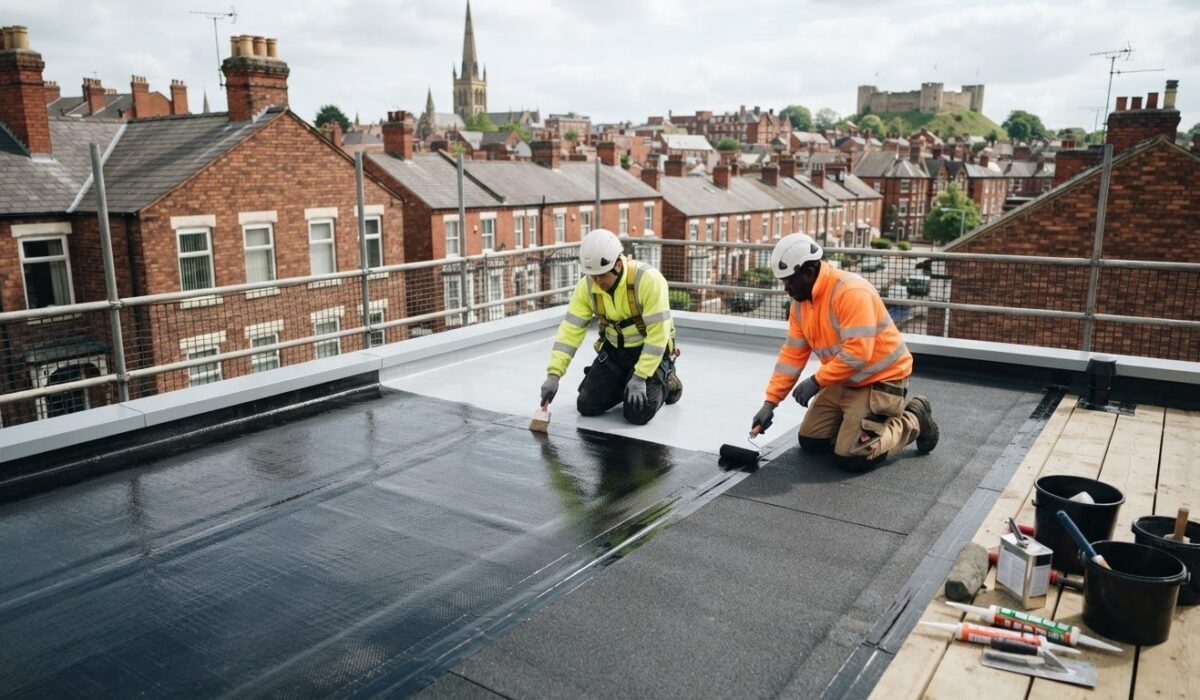
Over 90% of premature flat roof failures stem from on-site installation errors rather than faulty materials, according to industry technical analysis. If you’re currently weighing up whether to replace a leaky, blistering mineral felt deck with a modern fibreglass roof, that statistic matters. Property owners across Nottingham, Derbyshire, and Leicestershire are often left frustrated by recurring damp patches and conflicting trade advice regarding GRP rigidity versus EPDM rubber flexibility.
At Archers Roofing, we believe that protecting your home or commercial building starts with clear, honest facts tailored to our East Midlands climate. In this guide, you’ll discover whether a GRP fibreglass roof is the ideal long-term solution for your flat roof project. We compare realistic lifespans, structural strengths, and weather performance directly against EPDM rubber, showing you exactly how to achieve a dependable, fully guaranteed local installation that lasts.
Key Takeaways
- Understand the core anatomy of a GRP fibreglass roof and why its seamless resin laminate prevents the joint leaks common to traditional felt.
- Discover the practical trade-offs between rigid GRP and flexible EPDM rubber systems to identify the best fit for your property’s specific layout.
- Learn the crucial environmental and decking conditions required during installation to avoid costly delamination and bonding failures.
- Find out why choosing an established local specialist ensures your flat roof is fitted with tidy workmanship, correct weather monitoring, and a full structural guarantee.
What Is a GRP Fibreglass Roof and How Does It Work?
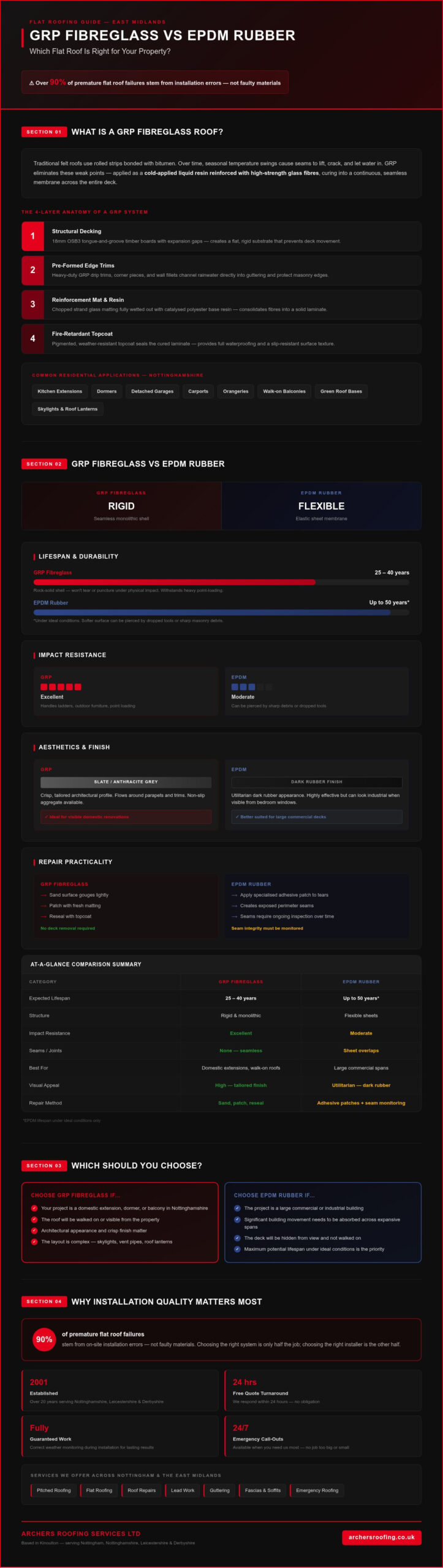
Traditional flat roofs rely on mineral felt rolled out in strips and bonded with hot bitumen or adhesive. Over time, seasonal temperature swings cause those glued seams to lift, crack, and let water seep through. A modern GRP fibreglass roof eliminates these weak points entirely. Instead of rolls, it is cold-applied as a thermosetting liquid resin reinforced with high-strength glass fibres, curing into a continuous, impenetrable membrane across your entire deck.
Technically classified as glass-reinforced plastic (GRP), this composite system forms a tough, seamless shell that easily handles standing water and impact. It won’t rot, blister, or attract moss. Finished with a tough, UV-resistant polyester topcoat in standard slate or modern anthracite grey, it provides an attractive architectural surface that withstands decades of East Midlands weather.
The Anatomy of a Modern GRP Roofing System
A dependable fibreglass roof relies on four distinct layers working as an integrated unit:
- Structural Decking: We install 18mm OSB3 tongue-and-groove timber boards fitted with expansion gaps to create a flat, rigid substrate that prevents deck movement.
- Pre-Formed Edge Trims: Heavy-duty GRP drip trims, corner pieces, and wall fillets channel rainwater directly into guttering and protect masonry edges.
- Reinforcement Mat & Resin: Chopped strand glass matting is fully wetted out with catalysed polyester base resin, consolidating the fibres into a solid laminate.
- Fire-Retardant Topcoat: A pigmented, weather-resistant topcoat seals the cured laminate, providing complete waterproofing and slip-resistant surface texture.
Typical Residential Applications Across Nottinghamshire
Because GRP resin moulds seamlessly around complex shapes, it suits a wide variety of properties throughout Nottingham, Leicestershire, and Derbyshire. We frequently install GRP systems on domestic kitchen extensions, dormers, detached garages, carports, and orangeries. Its structural rigidity makes it exceptionally well suited for private walk-on balconies or as a dependable base for green roofing designs. Liquid resin also seals tightly around skylights, roof lanterns, and vent pipes, removing the leak risks typical of cut-and-glued alternatives.
GRP Fibreglass vs EPDM Rubber: Which Flat Roof Is Best?
Replacing an aging flat roof rarely comes down to choosing between modern systems and old bitumen felt. Both GRP fibreglass and EPDM rubber offer massive upgrades in reliability, weather resistance, and thermal efficiency. The real challenge is determining which material fits your property layout, intended foot traffic, and visual expectations. We discuss these systems in detail in our homeowner guide to flat roofing, but the direct comparison comes down to rigidity versus elasticity.
Durability, Lifespan, and Impact Resistance
A professionally laid fibreglass roof cures into a rock-solid, monolithic shell. It easily withstands heavy point-loading, making it ideal if you need to place ladders for window cleaning or host outdoor furniture on a terrace. With an expected lifespan spanning 25 to 40 years, GRP won’t tear or puncture under physical impact. In contrast, EPDM rubber sheets rely on flexibility to absorb building movement across expansive industrial spans. While rubber lasts up to 50 years under ideal conditions, dropped garden tools or sharp masonry debris can pierce its softer surface.
Aesthetics, Finishes, and Architectural Suitability
Appearance often decides the matter for domestic renovations. GRP offers a crisp, tailored architectural profile that complements modern extensions and dormers across Nottinghamshire. Its resin flows right up to parapets and trims, accepting non-slip slate or anthracite aggregates for safe walking. EPDM delivers a more utilitarian, dark rubber finish. While highly effective on large commercial decks hidden from view, black rubber can look industrial when visible from upstairs bedroom windows.
Maintenance Demands and Repair Practicality
Day-to-day upkeep for both materials is minimal, mainly involving clearing autumn leaves from gutter runs. Should damage occur, repairs differ substantially:
- GRP Fibreglass: Localised surface gouges can be lightly sanded, patched with fresh matting, and resealed with topcoat without removing the wider deck.
- EPDM Rubber: Tears require specialised adhesive patches, which create exposed perimeter seams that must be inspected over time.
If you’re dealing with existing leaks or storm debris damage on an older structure, take a look at our practical guide to roof repair to gauge whether a targeted mend or full re-deck is the most cost-effective path. When planning any substantial replacement, make sure the installation satisfies official Building Regulations for roofs, particularly regarding structural load and insulation upgrades. If you’d like straightforward advice on whether GRP or EPDM fits your build, contact Archers Roofing for clear local guidance and a free quote returned within 24 hours.
Essential Conditions for a Flawless Fibreglass Roof Installation
Laying a durable fibreglass roof demands strict chemical discipline and meticulous timber preparation. Because GRP cures through an exothermic reaction between polyester resin and an active catalyst, any moisture on the boards or sudden drops in temperature will compromise the laminate. Getting these site conditions right separates an installation that lasts 30 years from one that delaminates after the first cold winter.
Decking Preparation and Structural Expansion Joints
We always strip failed coverings down to the joists and install fresh 18mm OSB3 tongue-and-groove boards. Using standard plywood or square-edge boards risks joint movement and surface cracks. Each board is laid with expansion gaps to accommodate natural timber shift across seasons. When replacing more than half of a roof deck, we also incorporate rigid insulation to comply with statutory Approved Document L energy efficiency standards. Before laying the main glass mat, every joint and trim edge is mechanically secured and reinforced with taped laminates.
Weather Windows and Catalyst Calibration in the East Midlands
Unpredictable rainfall across Nottinghamshire, Derbyshire, and Leicestershire makes timing critical. We test timber moisture with digital meters before starting, ensuring readings sit strictly below 12%. Applying resin to damp boards traps water, turning the laminate milky and causing bonding failure. Our team also measures ambient air and deck temperatures throughout the day, calibrating catalyst levels between 1% and 3% so the resin cures thoroughly without cracking in summer heat or remaining tacky in cooler autumn weather.
Perimeter Trims, Drainage, and Lead Abutments
Water runoff must move freely from the cured deck straight into external guttering without pooling along the edges. We install heavy-gauge drip trims at the eaves, coordinating with sound roofline drainage as outlined in our guide to fascias and guttering. Where the roof meets adjoining brickwork, we cut chases and install milled code lead flashing rather than applying resin directly to masonry, preventing perimeter splits. If you want peace of mind on your project, request a free quote from Archers Roofing and we will return detailed recommendations within 24 hours.
Why Choose Archers Roofing for Your Fibreglass Installation?
Buying materials online leaves you shouldering the full risk of bad weather, improper curing, and costly internal leaks. Archers Roofing Services Ltd removes that uncertainty entirely. Established in 2001 with over two decades of practical roofing experience, we deliver fully guaranteed flat roofing installations across Nottingham, Nottinghamshire, Derbyshire, and Leicestershire. Our team pairs honest, local craftsmanship with strict manufacturer standards to ensure your investment stays watertight for decades.
Decades of Local Expertise in Nottingham, Derby, and Leicester
Operating from our Kinoulton base, we have spent more than twenty years protecting homes and commercial properties throughout the East Midlands. That background means we understand how our local climate behaves and why professional timing matters during chemical resin applications. Homeowners consistently value our approach: punctual arrivals, tidy work areas, and clear communication from start to finish. We take pride in leaving every site clean and completely debris-free once the job is done.
Whether you need a replacement surface on a small detached garage, a full warm-deck installation on a kitchen extension, or complementary work on pitched roofing, lead flashings, chimney re-pointing, or fascias and soffits, no job is too big or small for our crew. If you are comparing local options, read our guide on choosing roofing contractors Nottingham to see what standards you should expect from any reputable tradesperson.
Seamless Execution from Inspection to Guarantee
Getting your flat roof assessed shouldn’t be complicated or stressful. We provide free written quotes returned within 24 hours, giving you clear, competitive pricing without hidden surprises. If you are currently dealing with water ingress, our team also handles emergency roof repairs to make your building secure before undertaking scheduled structural work. Every full fibreglass roof replacement we complete includes an extensive workmanship guarantee, giving you genuine peace of mind that your home is guarded by experienced local specialists.
Ready to upgrade your property with a dependable GRP system? Contact Archers Roofing today to arrange your site visit and receive your free, no-obligation quote within 24 hours.
Securing Long-Term Flat Roof Protection for Your Home
Choosing between GRP and EPDM comes down to your building’s structural layout, foot traffic requirements, and preferred finish. While rubber membranes provide flexibility on expansive commercial spans, a professionally installed fibreglass roof provides unmatched seamless rigidity, impact resistance, and a neat architectural profile. Long-term success hinges entirely on correct substrate preparation, moisture-free timber, and accurate catalyst mixing suited to our regional climate.
At Archers Roofing, we have served homeowners across Nottinghamshire, Derbyshire, and Leicestershire since 2001. We take pride in punctual arrivals, spotless work areas, and straightforward advice that puts your property first. Whether you are replacing a failing garage deck or completing a modern rear extension, all of our flat roofing installations come fully guaranteed for lasting peace of mind. Request your free 24-hour flat roof quote from Archers Roofing today, and let our team protect your investment for decades to come.
Frequently Asked Questions
How long does a professionally installed GRP fibreglass roof last?
A professionally fitted GRP fibreglass roof typically lasts between 25 and 40 years without significant maintenance. Because the cured resin forms an impenetrable barrier with zero bonded seams, it doesn’t suffer from the joint separation that plagues older roofing systems. As long as the initial timber decking is structurally sound and protected from trapped moisture during installation, your roof will easily endure decades of exposure to East Midlands weather.
Can you walk on a fibreglass flat roof without damaging it?
Yes, you can comfortably walk across a GRP flat roof for routine home maintenance. The cured glass-reinforced resin matrix provides exceptional compressive strength, easily bearing the weight of maintenance trades, window cleaners, and heavy ladders. For dedicated balconies, terraces, or heavy-traffic escape routes across Nottingham properties, we incorporate special slate aggregate into the final topcoat to provide a secure, slip-resistant finish that prevents accidental slips.
Is a fibreglass roof better than traditional roofing felt?
Yes, a fibreglass roof delivers far greater longevity and durability than traditional mineral felt. Legacy felt systems rely on multiple bitumen layers joined with hot torches or adhesives, which inevitably degrade, dry out, and blister under seasonal thermal cycles. GRP creates a continuous, joint-free laminated shell across the entire deck. This eliminates the weak lap joints where water ingress usually begins, making it a significantly more reliable investment.
Can a GRP roof be installed over existing timber boards or felt?
No, a GRP system must never be applied over old felt, asphalt, or deteriorated plywood decking. Thermosetting polyester resin requires an uncompromised mechanical bond with clean, dry 18mm OSB3 tongue-and-groove timber. Laying liquid resin over old felt traps existing damp underneath, preventing proper adhesion and triggering delamination. We always strip the surface back to bare joists, replace degraded timber, and verify low moisture levels before applying base resins.
Why do some fibreglass roofs make cracking or creaking noises in warm weather?
Creaking noises happen when installers fail to leave adequate thermal expansion gaps between timber decking sheets or against perimeter walls. On warm sunny days across Nottinghamshire, both the structural timber and GRP laminate naturally expand. If the boards are pressed tight against each other, thermal movement forces them to rub together under tension. Proper installation with calibrated expansion joints and correct perimeter trims completely prevents this issue.
What happens if it rains while a fibreglass roof is being installed?
Rainwater coming into contact with uncured polyester resin causes severe bonding failure. Water mixes with the liquid chemicals, turning the laminate milky white, preventing proper polymerisation, and leaving a spongy, porous surface that will leak. At Archers Roofing, we closely track local weather forecasts and always secure high-grade waterproof sheeting over open decks whenever sudden showers threaten our work area, ensuring complete chemical cure under dry conditions.