
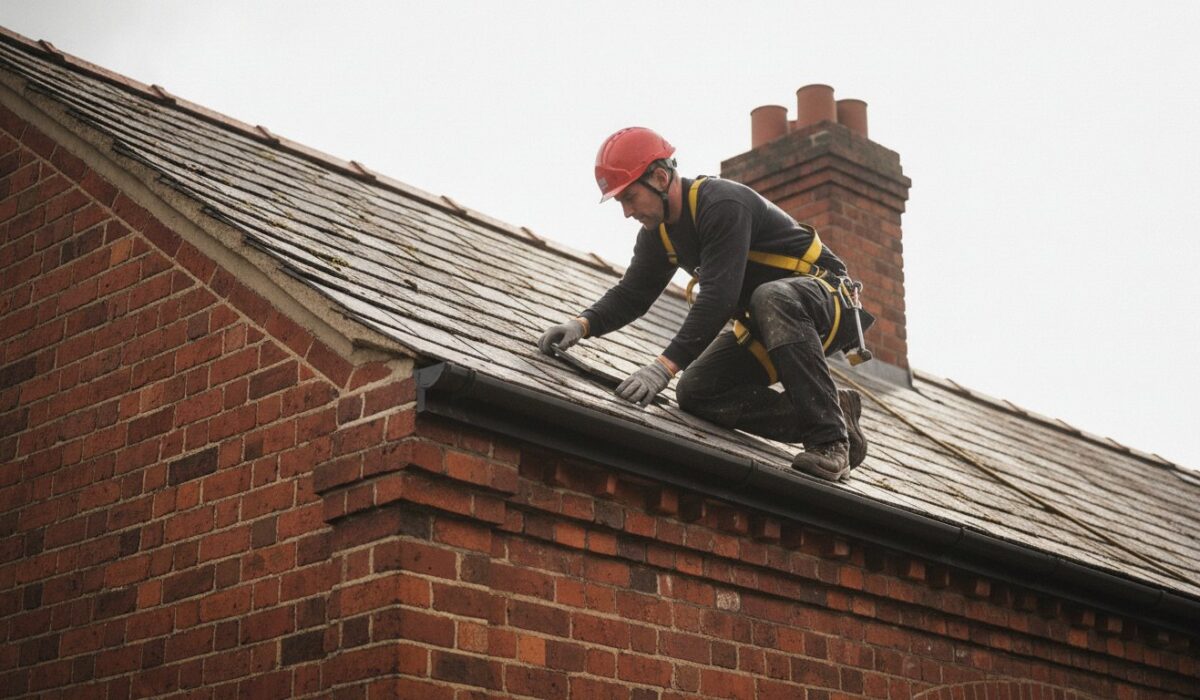
Did you know that an estimated 6,000 people are hospitalised in the UK every year due to ladder-related accidents during home DIY tasks? It’s a sobering figure that highlights why learning how to fix a slipped roof tile safely is about much more than just stopping a leak. We understand the anxiety that comes with seeing a gap in your roofline. Whether you’re in Nottingham or across the wider Nottinghamshire area, the sight of a displaced tile often brings immediate worries about internal water damage and the potential cost of repairs.
At Archers Roofing, we believe every homeowner should feel confident in their property’s protection. No job is too small for us, and we’ve developed this 2026 guide to help you identify the root cause of the slip, assess the risks involved, and determine if a DIY fix is truly the best path for your home in Leicestershire or Derbyshire. You’ll learn the practical steps to secure your roof and, crucially, how to recognise when a repair requires the specialist equipment and expertise of a professional team. From understanding the “Rule of Three” to preparing for unexpected weather, we’re here to ensure your roof remains a dependable guardian for your investment.
Key Takeaways
- Identify the root causes of slipped tiles, such as nail fatigue, to prevent recurring leaks and internal water damage.
- Follow our professional risk assessment to determine how to fix a slipped roof tile safely and when the pitch or height makes DIY too dangerous.
- Learn the correct technique for repositioning and securing tiles, including the essential step of clearing debris from the battens.
- Recognise the signs of wider roof failure, known as nail sickness, which may require more than a simple patch repair to keep your home dry.
- Understand when to utilise Archers Roofing’s free inspections and emergency services for homeowners across Nottingham and the surrounding counties.
Why Roof Tiles Slip: Identifying the Root Cause
A slipped tile is rarely just a bit of bad luck. It’s usually a warning sign. When we visit properties across Nottinghamshire and Derbyshire, we often find that one displaced tile is the “canary in the coal mine” for the rest of the pitch. Understanding the history and types of roof tiles used in our region helps explain why this happens. Many older homes in Nottingham, especially Victorian terraces, still rely on their original fixings from decades ago.
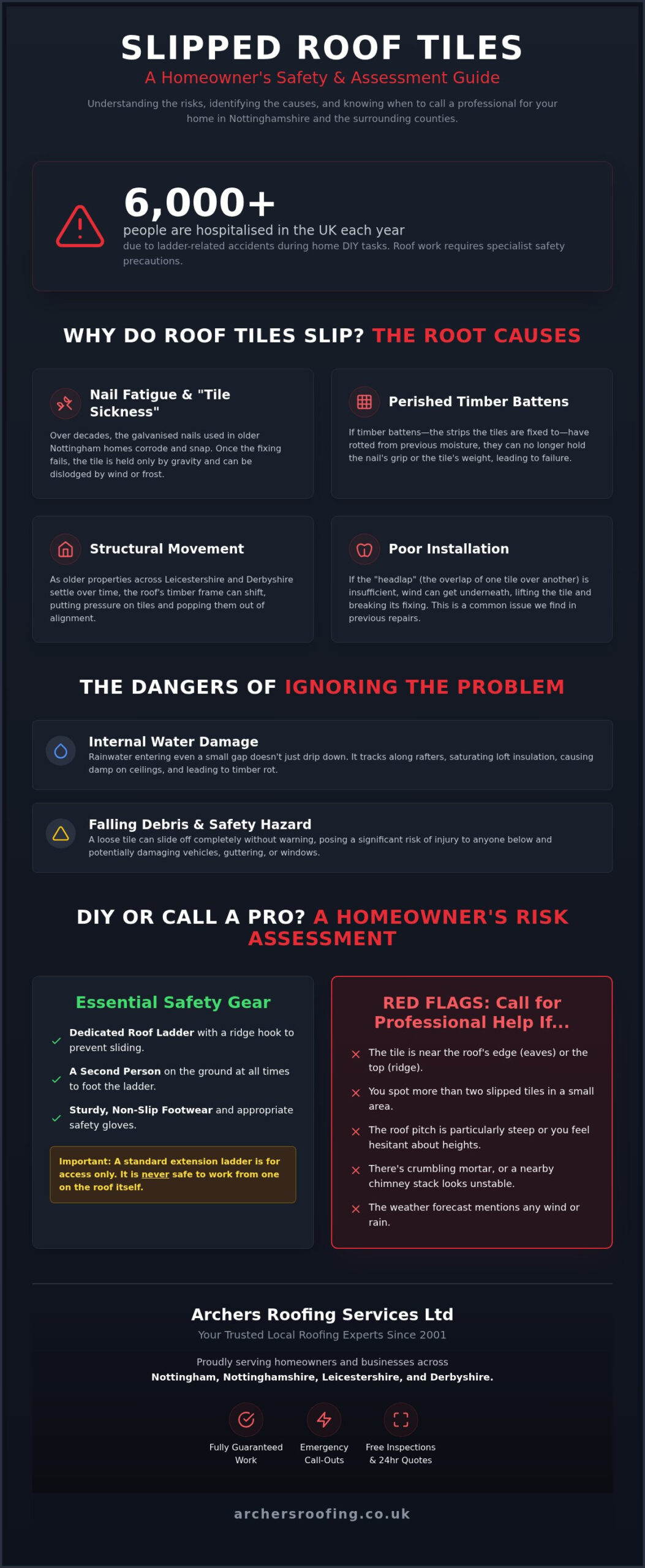
Over time, the galvanised nails used to secure tiles begin to perish. This process, known as “nail fatigue,” occurs as the protective coating wears away, leaving the iron to rust and eventually snap. Once the nail head fails, the tile is held only by friction and its neighbouring tiles. A strong gust of East Midlands wind or a heavy frost is often all it takes for it to slide. You can sometimes spot this “tile sickness” from your garden. We suggest using a pair of binoculars to look for uneven rows or tiles that look slightly “wonky” compared to the rest of the roofline.
Common Causes for Pitched Roof Tile Displacement
Beyond aging nails, structural movement plays a big role. As older properties settle, the timber roof frame can shift slightly. This movement puts pressure on the tiles, potentially popping them out of place. We also frequently see perished timber battens. If the wood has rotted due to previous dampness, it can’t hold the weight of the tile or the grip of the nail. Incorrect initial installation is another culprit. If the “headlap”, which is the amount one tile overlaps the one below it, isn’t sufficient, wind uplift can easily catch the edge and lift the tile. Learning how to fix a slipped roof tile safely starts with recognising these underlying structural weaknesses before you ever set foot on a ladder.
The Consequences of Ignoring a Slipped Tile
It’s tempting to wait for a dry spell, but even a three-inch gap can cause havoc. Rainwater doesn’t just stay on the surface; it tracks down the rafters and saturates your loft insulation. This leads to timber rot and damp patches on your ceilings. There’s also a physical danger. A loose tile can slide off completely, risking injury to anyone below or damaging your guttering and parked cars. We’ve provided emergency roof repairs since 2001, and we’ve seen how a small slip becomes a major structural headache if left through a wet winter. Addressing the issue early ensures your home stays dry and your repair costs remain manageable.
Is it Safe to Fix? A Homeowner’s Risk Assessment
Before you decide to climb up, we recommend a strict three-point safety check. While online forums often suggest that anyone with a ladder can handle a repair, the reality of working at height is far more complex. We’ve seen many DIY attempts in Nottinghamshire and Derbyshire end in injury because the homeowner underestimated the pitch of their roof or the weight of the tiles. Learning how to fix a slipped roof tile safely begins with an honest appraisal of your own limits and the environment around you.
Weather is the most unpredictable factor in our region. Even a slight breeze in the Derbyshire hills can be enough to unbalance you when you’re carrying tools or a heavy replacement tile. If the forecast mentions wind or rain, stay on the ground. Professional standards, such as those found in OSHA’s official safety regulations, highlight the critical need for fall protection. If your roof has a particularly steep pitch or if you feel any hesitation about your balance, it’s a clear sign to call in a specialist.
Essential Safety Equipment You Actually Need
A standard extension ladder is only for access; it is never for working on the roof itself. You must use a dedicated roof ladder equipped with a sturdy ridge hook. This hook secures the ladder over the top of the roof, preventing it from sliding. Don’t rely on “grippy shoes” as a substitute for professional fall protection. You also need a second person on the ground at all times to foot the ladder and provide assistance if something goes wrong. If you lack this equipment, we can provide a free inspection to help you avoid unnecessary risk.
When to Step Away: Red Flags for DIYers
Some repairs are too dangerous for anyone without professional training. If the slipped tile is near the eaves or the ridge, the risk of a fall is significantly higher. You should also watch out for signs of crumbling mortar on the ridge tiles or unstable chimney stacks nearby. These structural issues can lead to falling debris while you’re working. Finally, if you spot more than two slipped tiles in a single square metre, it usually indicates a wider failure of the battens or fixings. In these cases, a simple patch job won’t be enough to protect your home from water damage.
Step-by-Step Guide: Repositioning a Slipped Tile
Once you’ve secured your roof ladder and confirmed the weather is clear, you can begin the repair. We always start by clearing any debris from the affected area. Moss, grit, and old mortar often collect on the timber battens, which prevents the tile from sitting flat. Use a stiff brush to clean the batten and the underside of the surrounding tiles. This ensures the repair is permanent rather than a temporary patch.
To create space for the slipped tile, we use small wooden wedges. Slide these carefully under the tiles in the row immediately above the gap. Don’t force them too far; clay tiles can be brittle, especially on older Nottinghamshire properties. The goal is to lift the upper row just enough to reveal the batten where the tile’s “nibs” (the small protrusions on the back) need to hook. This lifting technique is the secret to how to fix a slipped roof tile safely without causing further damage to the rest of the pitch.
The Process of Sliding the Tile Back
- Step 1: Gently lift the tiles in the course above the slipped one using your wedges to hold them open.
- Step 2: Clear any moss or grit that has accumulated in the nib area on the batten.
- Step 3: Slide the tile back into position, ensuring the nibs hook firmly over the timber batten and the tile sits flush with its neighbours.
Securing the Fix: Nails vs. Adhesive
We strongly advise against using “instant” adhesives or silicone to stick tiles back down. While it seems like an easy fix, these materials fail quickly under the heat and frost cycles common in the East Midlands. For a professional result, use a “tingle”. This is a thin strip of lead or aluminium that you nail to the batten, slide the tile over, and then fold the bottom of the strip up to hook the tile’s edge. This mechanical fix is far more reliable than glue.
While you are up there, check the surrounding area for any other loose tiles. A single slip often means others are close to failing. If the task feels overwhelming or the damage is more extensive than you first thought, we can help. Our team provides emergency roof repairs and free quotes within 24 hours to give you total peace of mind.
When a Slipped Tile Signals a Wider Roof Failure
A single slipped tile often acts as the “canary in the coal mine” for your property’s structural health. While we’ve discussed how to fix a slipped roof tile safely, it’s vital to look at the bigger picture. If your home was built several decades ago, “nail sickness” could be affecting the entire pitch. When one tile slides, it often indicates that many others are only held in place by friction rather than their original fixings. We also suggest that homeowners with extensions or garages check their flat roofing sections; while tiles slip on slopes, flat systems often signal failure through membrane cracks or surface pooling that requires immediate attention.
We don’t just push a tile back into place and leave. During every repair, we investigate the surrounding lead work and flashings, as well as the condition of your fascias and soffits. These boards are essential for supporting your guttering and protecting the roof’s rafters from rot. If these are perishing, water can track back into the building, causing far more damage than a single loose tile. Our team provides a complete health check to ensure every part of your roofline is protected, grounded in over 20 years of local experience across Nottinghamshire.
Warning Signs of Widespread Roof Issues
- Daylight in the loft: If you can see pinpricks of light through the felt, your internal protection is compromised.
- Grit in the gutters: Finding “sand” or tile grit in your guttering indicates the surface of your tiles is perishing.
- Saggy rooflines: Bowing timber battens cause tiles to pop out of place and suggest a loss of structural integrity.
The Professional Solution in Nottingham
Choosing a professional roof repair is often more cost-effective than a failed DIY attempt. A botched repair can lead to deeper structural rot or injury. We maintain a “no job too big or small” policy, whether you need a single tile secured in Kinoulton or emergency roofing across Leicestershire and Derbyshire. Since 2001, we’ve built a reputation for punctuality and tidiness. You can request a free site inspection from our team today. We provide quotes within 24 hours and guarantee all our pitched roofing workmanship, so you can rest easy knowing your home is in safe hands.
Securing Your Home Against the Elements
A single displaced tile is more than a minor eyesore; it’s a breach in your home’s primary line of defence. While this guide explains how to fix a slipped roof tile safely, the most important takeaway is the “Rule of Three”: assessing your limits, your tools, and the underlying health of your roof. Whether the issue is simple nail fatigue or a sign of wider structural movement, addressing it quickly prevents costly water damage to your loft and ceilings.
We’ve protected properties across Nottingham, Leicestershire, and Derbyshire since 2001. Our team brings over 20 years of local expertise to every repair, ensuring your roof remains watertight and secure. We believe no job is too small, from securing a single slate to managing complex pitched roofing projects. Every repair we perform comes with fully guaranteed workmanship, giving you the confidence that your home is guarded by professionals who take pride in a tidy, punctual service.
Worried about a slipped tile? Contact Archers Roofing today for a free, no-obligation quote within 24 hours. We’re also available for emergency call-outs across the East Midlands to help you weather any storm. Don’t leave your property’s safety to chance; let us help you keep your home dry and secure for years to come.
Frequently Asked Questions
Is a single slipped roof tile an emergency?
A single slipped tile can become an emergency if heavy rain or high winds are forecast. Even a small gap allows water to reach the internal roofing felt and timber rafters. If your felt is old or damaged, this leads to immediate leaks in your loft space. We offer emergency call-outs across Nottinghamshire for this reason. The risk of the tile falling onto a conservatory or driveway also makes it a priority.
Can I fix a slipped roof tile from inside the loft?
No, you can’t properly fix a slipped tile from inside the loft. While you might see the gap from your attic, tiles are designed to be hooked over timber battens from the outside. Attempting to pull a tile back into place from the inside often damages the breathable membrane or roofing felt. To learn how to fix a slipped roof tile safely, you must access the roof externally using the correct safety equipment.
What is a “tingle” in roofing and should I use one?
A tingle is a thin strip of lead or aluminium used to hold a tile in place when the original nail has failed. You nail the strip to the batten, slide the tile over it, and then bend the end up to create a hook. We use these for reliable, long-term repairs. They’re far superior to adhesives or silicone, which perish quickly in the variable weather conditions common in Derbyshire and Leicestershire.
How much does it usually cost for a roofer to fix one tile in Nottingham?
Costs vary depending on the height of your property, the type of tile, and ease of access. While we don’t provide fixed prices without an inspection, we do offer free site visits and 24-hour quotes for homeowners in Nottingham. A professional repair ensures the job is done correctly the first time. This prevents more expensive structural issues later. We always aim for competitive pricing while maintaining our high standards of workmanship.
Why do my roof tiles keep slipping after a storm?
Tiles usually slip because of “nail fatigue” or weakened timber battens that can no longer hold a fixing. High winds during East Midlands storms create uplift that catches loose tiles. If the nails have rusted through, the tiles have nothing holding them to the roof. Recurring slips suggest that your roof needs a full health check. We can assess the condition of your fixings to see if a comprehensive solution is required.
Will my home insurance cover a slipped roof tile repair?
Most insurance policies cover damage caused by sudden events like storms, but they rarely cover general wear and tear. If a tile slips because the nails have simply aged over several decades, your claim might be rejected. However, if a storm causes multiple tiles to displace simultaneously, your insurer may assist with the costs. We recommend checking your policy details and seeking a professional inspection to document the cause of the damage.